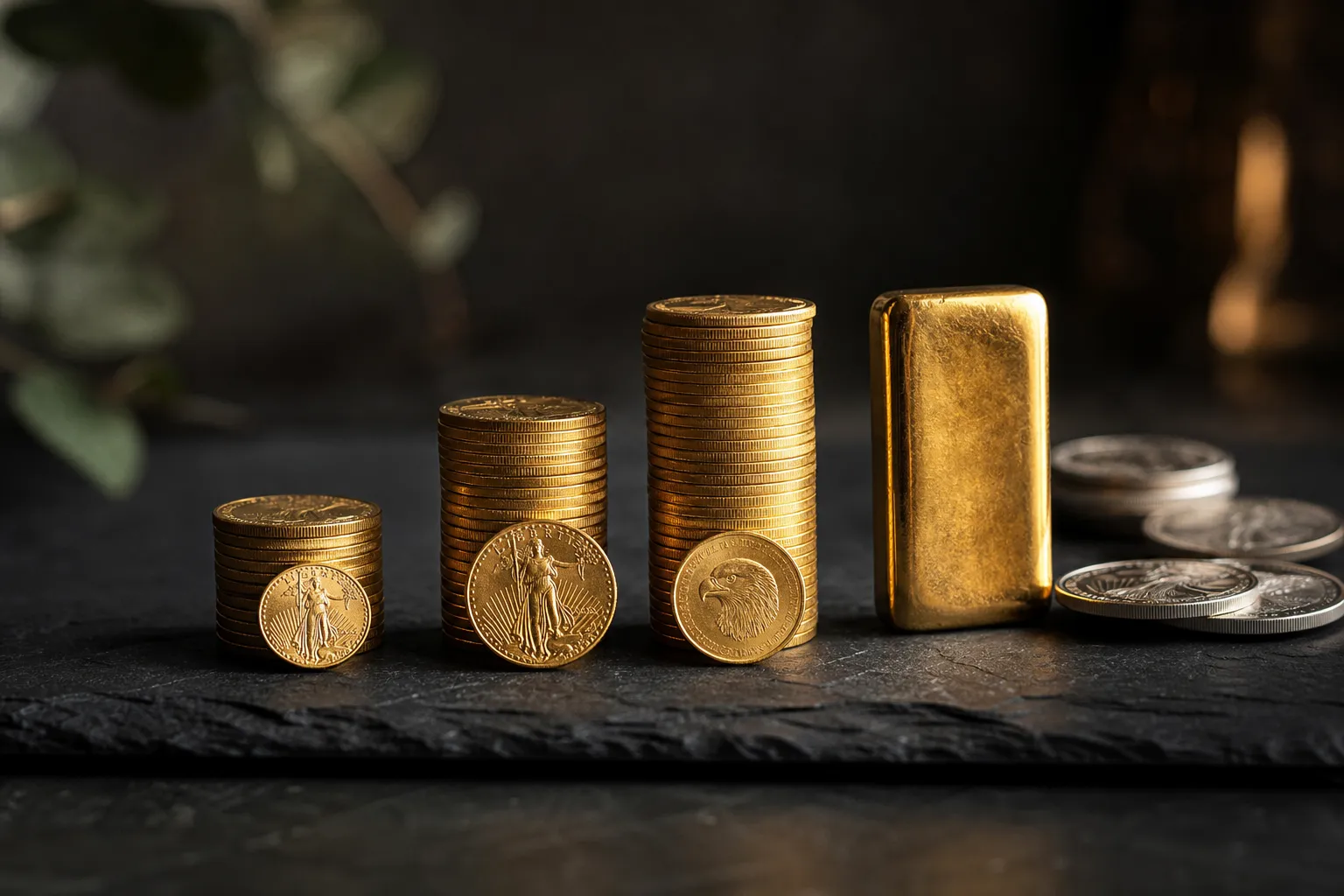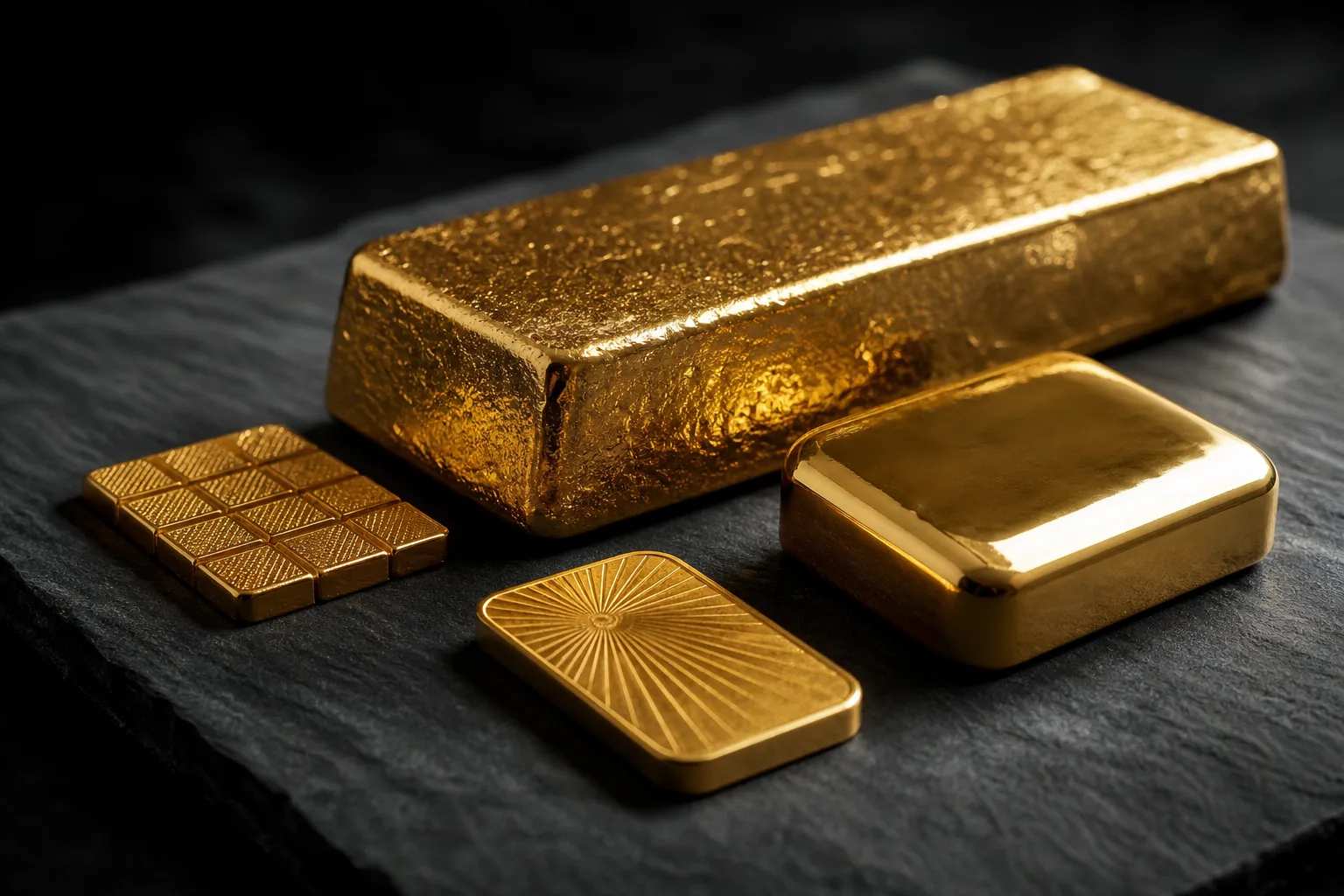
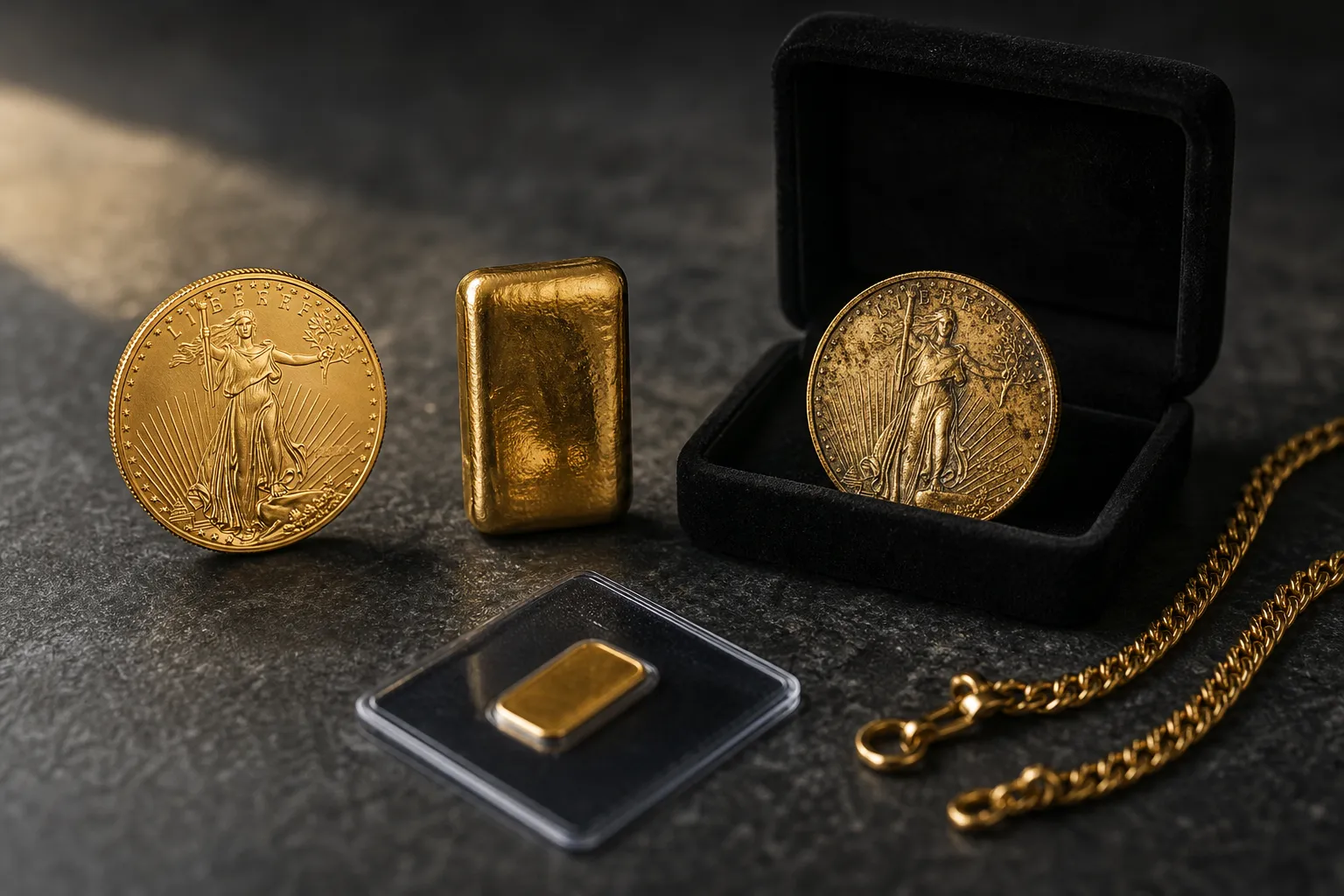
The five worst gold products to buy in 2026 are: "exclusive" or semi-numismatic coins sold through cold calls, TV adverts and gold-IRA pitches; gold-plated or "clad" tribute coins; tiny 1-gram and 1/20 oz pieces bought as investments; unbranded bars from online marketplaces; and jewellery bought as an investment. They have the same problem. You pay far more than the gold is worth (US regulators cite markups of 40% to 200% on collectible coins), and you get much less back when you sell. Standard 1 oz bullion coins and bars from known refiners are usually the better buy. Their premiums are typically around 3–6% over spot.
This guide uses regulator warnings, enforcement cases and 2025–2026 premium data. It explains why each product loses money, which red flags to look for and what to buy instead. With gold at roughly $4,100 per ounce in November 2026, overpaying by a few percentage points now costs hundreds of dollars per ounce. This is general information, not financial advice.
What are the worst gold products to buy? (Quick comparison)
| Product | Typical cost over gold value | Main problem when you sell | Better alternative |
|---|---|---|---|
| 1. "Exclusive" / semi-numismatic coins (phone, TV, gold-IRA sales) | 40–200% (CFTC); up to 130% alleged in one SEC case | Dealers buy back "at a fraction of the original sales price" (CFTC) | 1 oz bullion coins (Krugerrand, Maple Leaf, Britannia, Eagle) |
| 2. Gold-plated / "clad" / "layered" tribute coins | Almost the whole price; one replica held 13 mg of gold | Worth souvenir value only (Professional Numismatists Guild) | Genuine 1/10 oz bullion coin |
| 3. 1 g and 1/20 oz pieces bought as an investment | About 15–32% monthly average for a 1 g PAMP bar in 2025–26; peaked at 36.66% | The price has to rise a long way before you break even | 1/4 oz–1 oz coins or bars, or a divisible CombiBar |
| 4. Unbranded / unassayed bars from marketplaces | Looks cheap, but the bar may be fake | Counterfeits are worth nothing; dealers may insist on testing unknown bars | Bars from LBMA-accredited refiners, bought from established dealers |
| 5. Jewellery bought as an investment | Making charges of 5–20%+, plus VAT/sales tax | Making charges and tax are not refunded; a 20% charge needs about a 26% gold rise to break even (Gulf News example) | Bullion coins or bars; buy jewellery to wear |
1. "Exclusive", semi-numismatic and "limited edition" coins sold by phone, TV or gold-IRA pitch
What it is
These are modern coins sold as rare, collectible or "semi-numismatic". They are often recommended by a salesperson after you respond to a radio, TV or online advert about protecting your retirement savings. Many buyers make the purchase while rolling a 401(k) or IRA into a self-directed "gold IRA".
Why it's bad
- The markup is huge. The US Commodity Futures Trading Commission (CFTC) says bullion normally sells at 5–10% over spot. It also says customers are "often encouraged to purchase numismatic coins with premiums that can range from 40 percent to 200 percent above the spot price."
- "Semi-numismatic" has no fixed meaning. A March 2024 CFTC/FINRA bulletin calls it "a made-up industry term that really has no special meaning". It says such coins "typically aren't rare and carry no additional value". It also says that if someone charges you more for them, "it's likely a scam".
- The losses in enforcement cases are severe. In 2023 the SEC alleged that one California firm told retirement savers its markups were 1–5% when they were as high as 130%. In 2024 the court entered a consent judgment of more than $76 million, and the defendants neither admitted nor denied the allegations. In another 2023 case, the CFTC alleged that elderly customers were steered into coins sold at "double or even triple" their market value. The CFTC says it has brought cases over the past decade involving more than $500 million of overpriced metals.
- Selling is hard. According to the CFTC, buyers often have to sell back to the same dealer "at a fraction of the original sales price". FINRA says some gold-IRA fraud victims lost one-third to one-half of their savings to markups, fees and commissions.
Legitimate proof and commemorative coins also carry a collector premium, even when you buy them directly from a mint. The US Mint launched the 2026-W 1 oz Proof Gold Eagle, with its 1776–2026 dual date, at $6,100 when LBMA gold was $5,200–5,249.99. That is about 17% over its 1 oz of gold content before any reseller markup. Proofs can make sense for collectors. As a way to own metal, they cost more. Our proof vs bullion gold coins guide compares the two in detail.
Red flags
- A cold call, a "free silver" offer or a pitch that leans on fear of a market crash or account seizure
- The salesperson moves you from bullion to "better", "private" or "IRS-friendly" coins
- No written price, premium, buyback quote or fee schedule before you pay
- Claims that the coins "can't go down" or that the dealer will buy them back at what you paid (the Texas Attorney General lists both as fraud warning signs)
What to buy instead
Buy widely traded 1 oz bullion coins such as the Krugerrand, Maple Leaf, Britannia, Philharmonic or American Eagle. Their prices track spot, and dealers worldwide quote buyback prices for them every day. For retirement accounts, the IRS allows only certain bullion. Have any rollover reviewed by a registered adviser or tax professional, not by the person selling you the coins.
2. Gold-plated, "clad" or "layered" tribute coins and bars
What it is
These are base-metal coins, medals or bars with a thin coating of gold. They are often described as "24-karat gold layered", "gold clad" or "tribute proof". Many copy famous coins such as the 1933 Double Eagle. They are usually sold in numbered certificates and presentation boxes, which makes them look like investment products.
Why it's bad
The gold content is tiny. One widely discussed tribute replica was listed by its maker as 13 mg of 24-karat gold over bronze, about 0.00042 troy oz. At $4,000/oz that is less than $2 of gold. The Professional Numismatists Guild (PNG), a US dealer body, advises that privately plated coins "should only be viewed as mementos or souvenirs, and not as investments in precious metals." A former PNG president described buyers being "astounded, then saddened" to learn that plated commemorative quarters were worth little more than 25 cents each.
Red flags
- The words "plated", "clad", "layered", "finished in", "tribute" or "replica" in the description
- The listing gives no fine-gold weight in grams or troy ounces
- "Certificate of authenticity" from the seller rather than a sovereign mint or recognised refiner
- Selling points like "limited mintage" and "only X made"
What to buy instead
If the budget is small, buy a genuine 1/10 oz bullion coin. It contains about 3.1 g of fine gold, more than 200 times the gold in the replica above, and you can resell it anywhere.
3. Tiny 1-gram and 1/20 oz pieces bought as an investment
What it is
These are gram-sized bars and 1/20 oz coins, usually sealed in assay cards. They are real gold from real refiners, so this is not a scam. The problem is the cost per gram.
Why it's bad
Making, packaging and handling cost about the same whether a bar weighs 1 g or 1 oz, so small pieces carry much larger premiums. FindBullionPrices tracks the lowest dealer price for the PAMP Suisse Lady Fortuna 1 g bar. Its monthly average premium was 15.36% to 31.65% between June 2025 and July 2026, with a high of 36.66% on 30 January 2026, during that winter's price spike. On 9 November 2026, the same site's cheapest 1 oz PAMP bar was 3.6% over spot, and the six dealer offers ranged from 3.6% to 5.3%.
For example, at an 18% premium, 31.1 grams of gold bought one gram at a time costs about 14 percentage points more than one 1 oz bar. With gold around $4,000, that is roughly $575 more for the same amount of metal. If you later sell near melt value, you start that much behind.
Red flags
- "Affordable" marketing with no premium shown as a percentage of spot
- Prices quoted per item rather than per gram
- Regularly topping up a holding with gram bars instead of buying fewer, larger pieces
What to buy instead
Buy fewer, larger pieces, such as a 1/4 oz or 1 oz coin, or a 1 oz to 50 g bar from a major refiner. If you want to be able to sell in small amounts, a Valcambi CombiBar breaks into 1 g pieces but costs much less per gram than single gram bars. Our guide to whether fractional gold coins are worth it sets out when small sizes still make sense, for example as gifts.
4. Unbranded or unassayed bars from online marketplaces
What it is
These are bars, and sometimes coins, sold on general marketplaces, classifieds and social media. They often have no recognisable refiner hallmark, or they copy the packaging of a famous brand. Prices are often just below spot, which is why people buy them.
Why it's bad
Counterfeiting is a real risk. In April 2025, the Western Australian Government, The Perth Mint and WA Police issued a joint warning that fake bars and coins were being sold through "eBay and Facebook Marketplace". Some carried "lookalike markings and packaging of The Perth Mint", and buyers only found out when they took them to the Mint for verification. This is not a new problem. In 2017, Edmonton police reported bars that were "nothing more than copper bars plated in gold". Some of them were being sold on classified websites, and similar fake 1 oz bars in Winnipeg were stamped "Perth Mint" or with PAMP's full name. Even if a no-name bar is genuine, many dealers will want to test it before buying, which slows the sale and can reduce the price you get.
Red flags
- Prices at or below spot from a private seller
- No serial number, no assay card, or an assay card that does not match the bar
- Stock photos instead of photos of the actual bar
- Pressure to pay by bank transfer, gift card or other irreversible methods
What to buy instead
Buy bars from LBMA-accredited refiners such as PAMP Suisse, Valcambi, Argor-Heraeus, Heraeus, Metalor, The Perth Mint, The Royal Mint or the Royal Canadian Mint, and buy them from an established dealer. Our refiner comparison covers the brands, and how to tell if a gold bar is real explains the checks to do before you buy.
5. Gold jewellery bought as an investment
What it is
This means buying chains, bangles or other pieces mainly to store value rather than to wear. It is common in markets where jewellery is sold by weight at a daily gold rate.
Why it's bad
The price includes more than gold. It also covers making charges and, in many countries, VAT or sales tax, and buyers usually do not pay those back when you sell. An October 2026 Gulf News worked example used a 20-gram, 22-karat necklace with a 20% making charge and 5% VAT. If sold for its gold value at an unchanged price, it would lose about 20.6% of the purchase price. The gold component would need to rise 26% just to break even. At a 5% making charge, a 10.25% rise was needed. Jewellery is also often 9 ct (37.5% gold), 14 ct (58.5%) or 18 ct (75%), so check the actual fine-gold weight. A "full gold value" buyback promise may only mean store credit towards another purchase.
Red flags
- A gram rate is advertised, but the making charge is not shown separately
- No written cash buyback policy
- Stones included in the weight you pay for
What to buy instead
Buy jewellery because you want to wear it. For savings, use bullion coins or bars, where the cost over spot is usually a few percent rather than a fifth of the price.
How do you avoid overpaying for gold in 2026?
- Check the spot price first, then work out the premium: (price − gold value) ÷ gold value × 100. The CFTC recommends this formula.
- Ask what the dealer would pay if you sold the item back today. The gap between buying and selling prices matters more than the advertised price.
- Get every fee in writing, especially for IRAs: setup, storage, insurance and custodian fees.
- Prefer common 1 oz products from known mints and LBMA refiners. They are the easiest to sell and usually carry the lowest premiums. See the cheapest way to buy gold in 2026.
- Never buy after a cold call, and be careful with any pitch built on fear or urgency.
The downsides of "good" gold products
Bullion is not risk-free either. The average monthly spot price fell from about $5,050 in February 2026 to about $4,080 in July 2026, according to FindBullionPrices data, so even a low-premium bar can be worth less than you paid. Physical gold also costs money to store and insure, and it pays no income. Avoiding the five products above reduces costs and fraud risk, but it does not remove price risk.
Buying with crypto
If you prefer to pay in cryptocurrency, Bitgolder sells LBMA-certified bullion coins and bars from 1 g to 1 kg. Prices track live spot and the USD total is locked at checkout. You can pay in 35 cryptocurrencies, including Bitcoin, Monero and USDT/USDC. Insured, signature-required delivery is available to 77 countries, with customs duties and import taxes included in the price. Bitgolder also offers a live-spot buyback through its sell page.
Sources
- CFTC, "Customer Advisory: Beware of Gold and Silver Schemes Designed to Drain Your Retirement Savings": cftc.gov
- CFTC & FINRA, "Investor Bulletin: 10 Things to Ask Before Buying Physical Gold, Silver or Other Metals" (20 March 2024): finra.org
- CFTC Press Release 8881-24, joint CFTC/FINRA/NASAA precious metals warning (20 March 2024): cftc.gov
- CFTC Press Release 8694-23, semi-numismatic coin fraud case (25 April 2023): cftc.gov
- SEC Litigation Release No. 25727 (15 May 2023): sec.gov; final judgment LR-25996: sec.gov
- Texas Attorney General, "Consumers Should Do Their Homework Before Investing in Gold Coins": texasattorneygeneral.gov
- Professional Numismatists Guild statement on plated coins (via CoinCollector.org): coincollector.org
- Collectors Weekly, gold content of a tribute replica (13 mg): collectorsweekly.com
- FindBullionPrices, PAMP 1 g bar premium history: findbullionprices.com; 1 oz PAMP bar dealer prices (9 Nov 2026): findbullionprices.com
- CoinNews, "U.S. Mint Releases 2026-W Proof Gold Eagles Featuring 1776-2026 Dual Dates" (5 March 2026): coinnews.net
- Government of Western Australia, "Don't be ripped off falling for Fool's Gold" (27 April 2025): wa.gov.au
- Global News, fake gold bars in Edmonton police investigation: globalnews.ca
- Gulf News, "Buying gold in the UAE: How making charges affect your profits when selling" (updated 1 October 2026): gulfnews.com
Frequently asked questions
What is the worst type of gold to buy as an investment?
Collectible or so-called semi-numismatic coins sold through cold calls, TV adverts or gold-IRA pitches usually cost the most. The US CFTC says such coins are often sold at 40% to 200% above spot, compared with about 5% to 10% for bullion. Dealers often buy them back at a fraction of the price. Gold-plated replica coins are worse still, because they contain almost no gold.
What does semi-numismatic mean?
It is a sales label, not a recognised category. A 2024 CFTC and FINRA investor bulletin calls it a made-up industry term with no special meaning. It says these coins typically are not rare, carry no additional value and may be harder to sell than bullion. The bulletin warns that if a seller charges extra because a coin is semi-numismatic, it is likely a scam.
Are gold-plated or gold-clad coins worth anything?
Very little. Plated, clad or layered coins are base metal with a thin gold coating. One widely sold tribute replica was listed by its maker as containing 13 milligrams of gold, worth under $2 at about $4,000 per ounce. The Professional Numismatists Guild advises treating plated coins as souvenirs or mementos, not as precious metal investments.
Are 1 gram gold bars a good investment?
They are genuine gold but expensive per gram. Tracking data for the PAMP Suisse 1 g bar shows monthly average premiums of roughly 15% to 32% between mid-2025 and mid-2026, peaking at 36.66% in January 2026. In November 2026, 1 oz PAMP bars were offered at about 3.6% to 5.3% over spot. Small bars suit gifts better than long-term saving.
Is it safe to buy gold bars on eBay or Facebook Marketplace?
It carries real counterfeit risk. In April 2025, the Western Australian Government, The Perth Mint and WA Police warned that fake bars and coins with lookalike Perth Mint markings and packaging were being sold through eBay and Facebook Marketplace. The safest approach is to buy bars from recognised LBMA-accredited refiners through established dealers, and to check serial numbers and assay cards.
Is gold jewellery a good investment?
Usually not, if investment is the main goal. The price includes making charges and often VAT or sales tax, which buyers generally do not refund when you sell. In a Gulf News example, a 22-karat necklace with a 20% making charge and 5% VAT lost about 20.6% if sold at its gold value. The gold price needed to rise 26% just to break even.
What gold should I buy instead?
For most buyers, widely traded 1 oz bullion coins such as the Krugerrand, Maple Leaf, Britannia, Philharmonic or American Eagle are the lower-cost choice. So are 1 oz to 1 kg bars from LBMA-accredited refiners. They track spot closely and are easy to resell worldwide. Compare the premium over spot and ask for the dealer's buyback price before buying.
How do I calculate the premium I am paying over spot?
First work out the gold value: the item's fine gold weight in troy ounces multiplied by the current spot price. Then subtract that from the selling price, divide by the gold value and multiply by 100. The CFTC recommends this formula. For example, a 1 oz coin priced at $4,160 with spot at $4,000 carries a 4% premium.
Ready to buy gold with crypto?
Browse 400+ LBMA-certified coins and bars, priced live and shipped fully insured.
Shop the vault