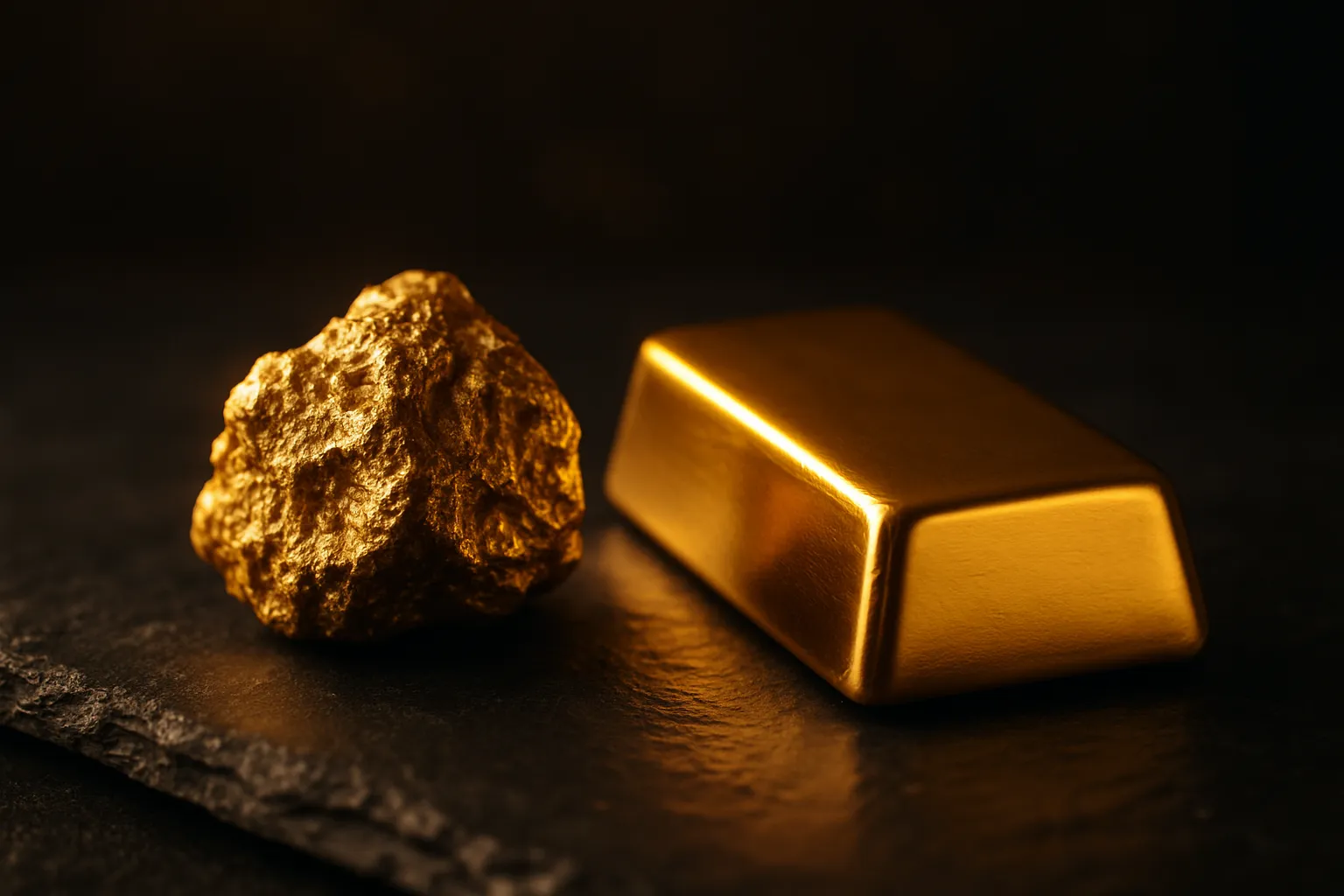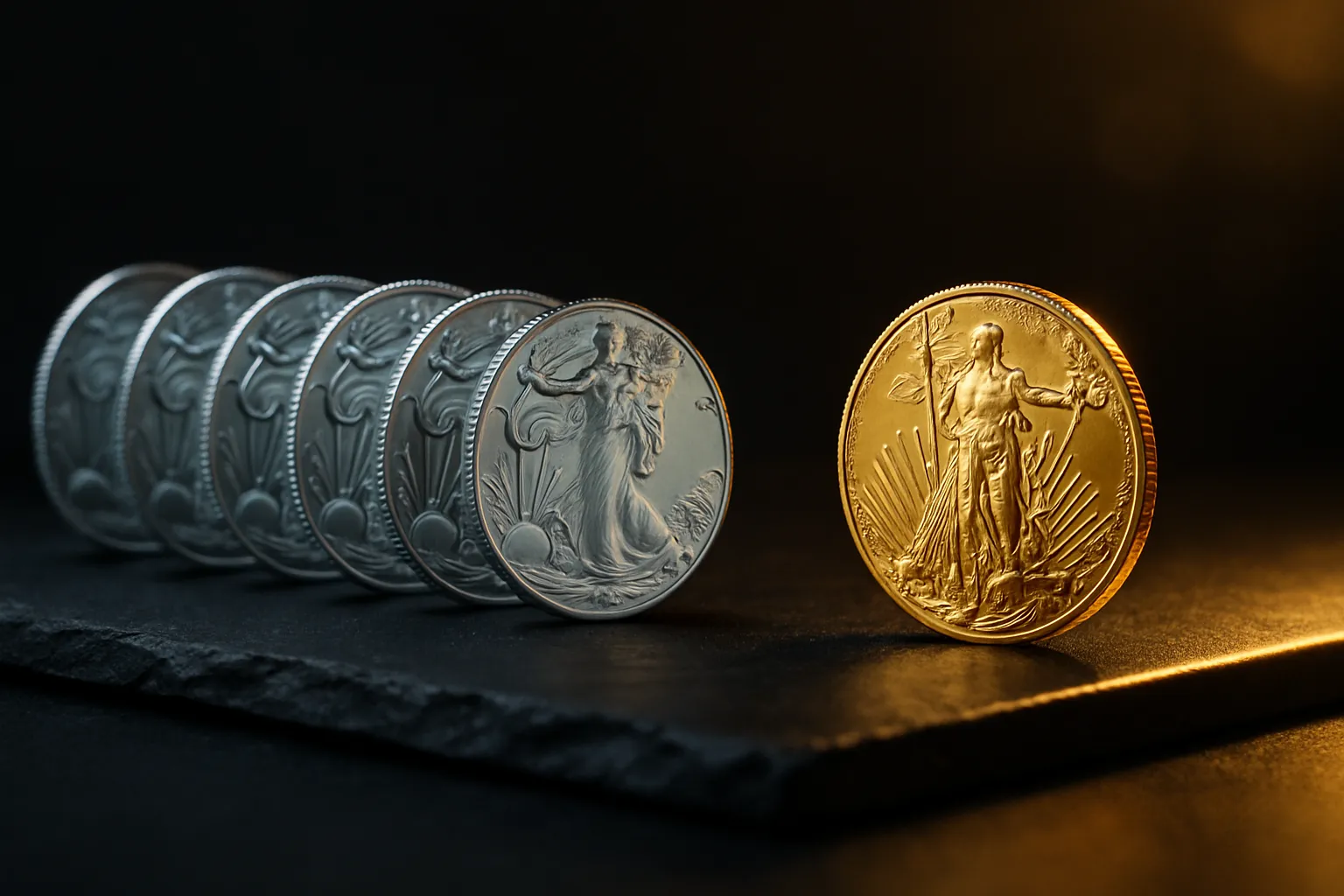
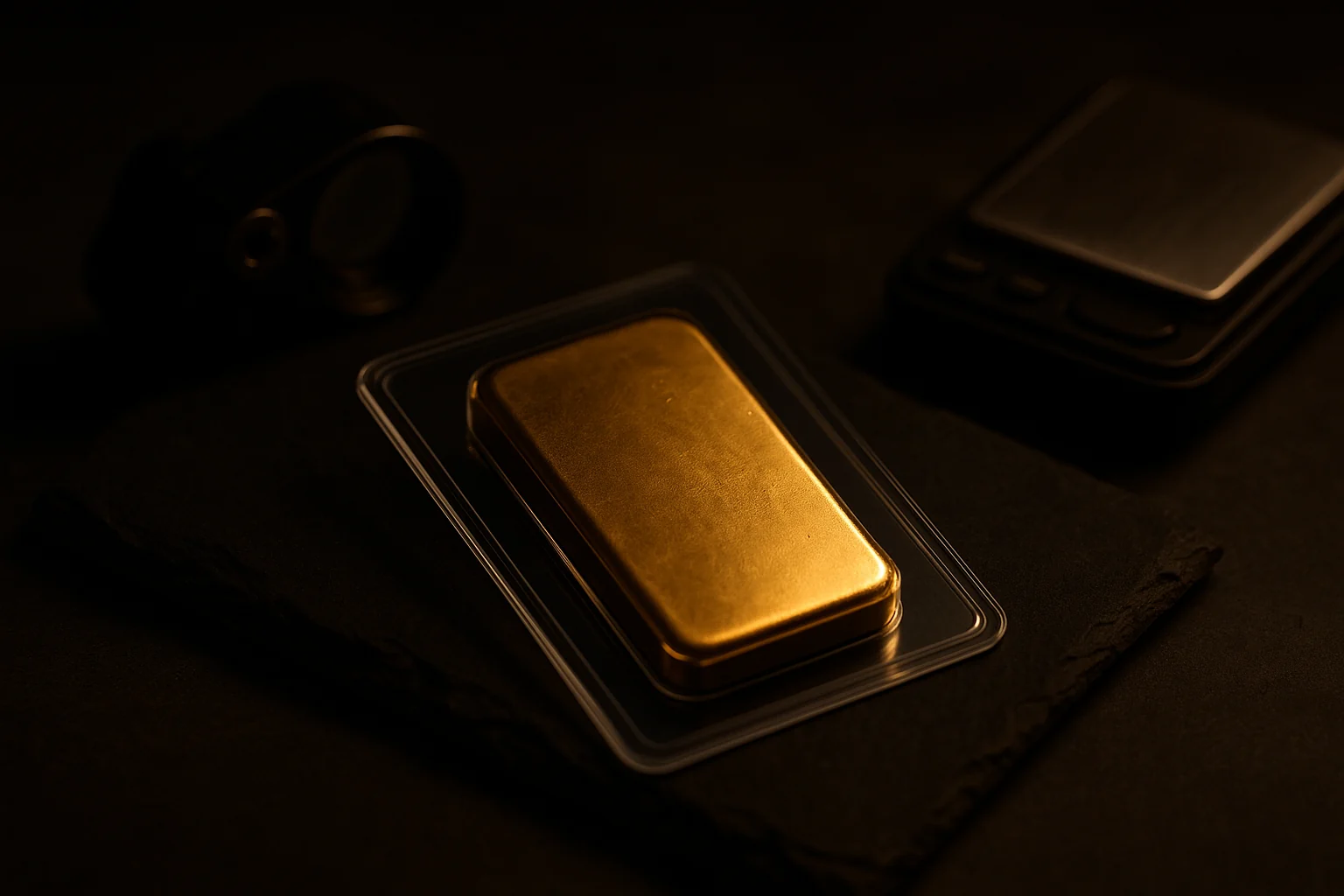
There is a comforting version of this topic and an honest one. The comforting version hands you a checklist of kitchen-table tests and implies that if a bar passes them, it is real. The honest version is this: weight, a magnet and even an X-ray gun can all be fooled by a good fake — and the fake that beats them, a tungsten core, is the one actually used to defraud people. The reliable protection is not a test you run after the fact; it is buying a sealed, serial-matched bar from an accredited refiner through a dealer that stands behind it. This guide gives you both: the at-home checks that catch the cheap fakes, and a clear-eyed account of what those checks miss.
Why gold gets faked, and how
Most counterfeits fall into two families. The first is base-metal fakes — lead, brass, copper, gold-plated tungsten — trying to pass as solid gold. The second is real-brand fraud: genuine or near-genuine metal wearing a refiner's stamp and serial it is not entitled to, or a hollowed bar refilled with a cheaper metal. The reason tungsten keeps appearing is pure physics: gold's density is 19.32 g/cm³ and tungsten's is 19.25 — a difference of less than half a percent. Tungsten is also non-magnetic and cheap. Clad it in gold and it can pass weight, size, magnet and a surface scan all at once. Every other cheap metal is far less dense (lead 11.34, silver 10.49, copper 8.93), which is exactly why the simple tests below work against them — and why tungsten is the exception that the simple tests do not catch.
The at-home tests — what each one catches, and misses
1. Weight and dimensions (start here)
A genuine bar matches its stated weight to a hundredth of a gram. A one-ounce gold bar weighs exactly 31.1035 g; a kilo bar is 1,000 g (32.15 troy oz). Pair that with the exact dimensions the refiner publishes — a PAMP 1 oz minted bar is about 41 × 24 × 1.7 mm — and you catch almost every cheap fake at once, because a base metal light enough to be wrong on weight will be wrong on size, and one sized correctly will be wrong on weight. Catches: lead, brass, copper, most plated fakes. Misses: a correctly-sized tungsten core.
2. The magnet test
Gold is non-magnetic — technically diamagnetic, very slightly repelled. Hold a strong neodymium magnet to the bar: any attraction means iron, steel or nickel inside, and the bar is fake. Catches: ferromagnetic fakes. Misses: tungsten, lead, copper and brass are all non-magnetic and pass cleanly. Treat this as a first screen, never a verdict.
3. Density (the strongest home test)
Because gold's density is so high and so hard to fake, measuring it is the most powerful check you can do at home. Weigh the bar in air, then suspend it in water and weigh again; density = mass in air ÷ (mass in air − mass in water). Compare to 19.3 g/cm³. A lead or brass fake fails dramatically. Catches: essentially every metal except one. Misses: tungsten, whose density sits within 0.4% of gold — a density test alone cannot separate them.
4. The ping (acoustic) test
Struck gently, real gold and silver ring with a clear, sustained tone; a base-metal core produces a short, dull thud. Free apps such as Pingcoin analyse the frequency against reference values. It is a genuinely useful check for loose coins. Misses: it does not work on a minted bar sealed in an assay card, and a hard tungsten core can still ring — so treat it as supporting evidence, not proof.
5. Tests that sound good but under-deliver
- Ice test. Precious metals conduct heat well, so ice melts quickly on them. In reality this is a silver test — silver has the highest thermal conductivity of any metal — and the effect on gold is weak and inconclusive. A curiosity, not proof.
- Ceramic scratch test. Dragging the bar on unglazed tile leaves a gold streak for real gold, grey/black for pyrite. But gold plating also leaves a gold streak, and the test is destructive — never do it to a sealed investment bar.
- XRF gun. The tool dealers use reads composition, but only of the surface — it penetrates roughly 10–15 microns into gold. A tungsten core under even a 0.2 mm gold shell reads as pure 9999 gold. An XRF is a purity and plating screen, not a core-authenticity test. This surprises people, because it looks like the definitive machine.
6. The tests that actually catch tungsten
If you genuinely need to verify an unsealed bar, two methods reach past the surface. An ultrasonic thickness gauge sends sound through the metal; sound travels far faster through tungsten than gold, so a tungsten-cored bar reads too thin for its dimensions and gives itself away. Electrical-conductivity (eddy-current) testing similarly sees the interior. A calibrated Fisch tester — a slotted gauge that checks weight, diameter, thickness and shape against a specific coin's spec simultaneously — catches base-metal fakes on coins, though not tungsten by itself. These are the tools a serious buyer uses; a scale and a magnet are not enough on their own.
The real defence: sealed bars, matching serials and accredited refiners
Here is the shift in thinking that actually protects your money. Instead of buying an unknown bar and testing it, buy a bar whose authenticity is built in and verified before it reaches you. That is what tamper-evident packaging and serial numbers are for.
- PAMP CertiPAMP / Veriscan. The bar is sealed in a card showing weight, purity, a unique serial and the signature of an independent Swiss assayer. PAMP's free Veriscan app goes further: it photographs the bar's microscopic surface — a fingerprint no two bars share — and matches it against PAMP's database. It was accredited by the LBMA as a security feature in 2023. Bitgolder stocks Veriscan bars including the 1 oz Fortuna and 10 oz.
- Argor-Heraeus Kinebar. A holographic kinegram engraved into the bar itself, shifting as you tilt it — practically impossible to replicate and, unlike packaging, part of the metal. See the 1 oz Kinebar.
- Perth Mint CertiCard. A tamper-evident blister that shows "VOID" if prised open and uses UV ink to reveal a "seal broken" message; the serial is printed on the card and laser-etched on the bar so the two must match.
- Metalor and Umicore seal minted bars in assay cards with matching serials, and offer verification apps/pages (MetalorCheck; Umicore's serial check) — good value, well-protected metal, as on the Metalor 100 g in assay card.
Do not break the seal. The intact card with matching serials is what lets the next buyer accept the bar on sight. Break it and even genuine gold has to be re-verified, costing you time and a little value.
The honest truth about "serial number lookup"
A lot of searches ask for a "Royal Canadian Mint gold bar serial number lookup" or a way to type a PAMP serial into a website. Here is the reality: most mints do not offer a public serial database. There is no consumer RCM serial-lookup site; PAMP verifies through the Veriscan surface scan, not a serial page; the Perth Mint asks you to contact the mint or an authorised dealer. The verification is the chain — serial on the bar equals serial on the card equals serial on the certificate, inside an unbroken seal — not a search box. Metalor and Umicore are the partial exceptions, with apps or pages that check a code. Anyone promising an "official serial lookup" for the others is mistaken, and that itself is a small red flag.
What history teaches: the real fraud cases
These are not hypotheticals. In 2012, a dealer in New York's Diamond District drilled a 10 oz "PAMP" bar and found grey tungsten inside — the bar carried the right logo, purity stamp, serial and paperwork, but held about a fifth of its supposed gold. In 2019, a Reuters investigation found more than a thousand counterfeit "kilobars" worth over $50 million bearing Swiss-refiner stamps they were not entitled to, some sitting in major bank vaults; the fraud first surfaced when two bars turned up with the same serial number. In 2020, a Chinese jeweller used roughly 83 tonnes of gilded copper as loan collateral to raise the equivalent of billions of dollars. The lesson across all of them is consistent: the fakes that matter are professional, they pass the easy tests, and they are defeated at the level of provenance — accredited refiner, sealed packaging, trusted dealer — not by a scale at your kitchen table.
A separate scam worth naming
Not every "gold scam" involves fake gold. Impersonation fraud — where a caller posing as a bank or government agent convinces a victim to buy real gold and hand it to a "courier" — cost US victims an estimated $126 million in 2024 alone. The gold is genuine; the theft is social engineering. No authenticity test protects you here. The defence is simply this: no real institution will ever ask you to convert your savings to gold and give it to someone at your door.
A practical buyer's checklist
- Buy from a reputable dealer, not a private marketplace listing or an auction "bargain."
- Choose bars from an LBMA-accredited refiner — PAMP, Valcambi, Argor-Heraeus, Metalor, Umicore, Perth Mint, RCM, C. Hafner.
- Insist on a sealed assay card with a serial that matches the bar, and keep it sealed.
- Prefer bars with built-in verification — Veriscan, Kinebar, a mint verification app.
- If a deal looks too good to be true, it is. A "no returns" listing on an unknown seller is a red flag.
- Do a quick weight-and-magnet screen on arrival; for a large unsealed bar, use ultrasonic or conductivity testing, not just a scale.
Buy protected, from the start
The simplest way to never worry about authenticity is to buy sealed, LBMA-refiner bars from a dealer that stands behind every piece. Bitgolder sources bars from every refiner named above, delivered sealed with matching serials, priced live to spot and payable in Bitcoin, Monero, Litecoin or stablecoins — with no ID under $350,000 and insured, discreet worldwide delivery. Browse the range on the buy gold with crypto page, compare the makers in our gold bar refiners guide, and if you are checking a coin rather than a bar, the same principles apply — recognised issue, correct weight, trusted source.
General information only, not investment advice. Testing methods have limits; when in doubt, use a professional assay and buy only from reputable, accredited sources.
Frequently asked questions
How can I test if a gold bar is real at home?
Start with weight and dimensions (a 1 oz bar weighs exactly 31.1035 g; a kilo bar 1,000 g) — together these catch almost every cheap fake. Add a magnet test (gold is non-magnetic) and, if you can, a density test (gold is 19.32 g/cm³). These catch lead, brass and copper fakes, but not a tungsten core, which needs ultrasonic or conductivity testing.
Why can't an XRF gun detect a fake gold bar?
An XRF gun reads only the surface — it penetrates roughly 10–15 microns into gold. A tungsten core hidden under even a 0.2 mm gold shell reads as pure 99.99% gold. XRF is a good purity and plating screen, but it cannot see a counterfeit core. Ultrasonic thickness gauges and electrical-conductivity tests are what actually catch tungsten.
Is there a gold bar serial number lookup?
Mostly no. Most mints do not offer a public serial-number database — there is no consumer Royal Canadian Mint serial lookup, and PAMP verifies via its Veriscan surface-scan app rather than a serial page. Metalor and Umicore are partial exceptions with verification apps or pages. Real verification is the matching serial on the bar, card and certificate inside an unbroken seal.
What is a tungsten-filled gold bar?
It is the most dangerous counterfeit because tungsten's density (19.25 g/cm³) is within half a percent of gold's (19.32). A gold-clad tungsten bar can pass weight, size, magnet and surface-XRF tests. Documented cases include fake PAMP kilobars found in bank vaults. Only interior tests (ultrasound, conductivity) or buying sealed bars from accredited refiners reliably defeat it.
How do I buy gold bars safely?
Buy from a reputable dealer, not private listings or auction bargains; choose bars from an LBMA-accredited refiner; insist on a sealed assay card with a serial that matches the bar and keep it sealed; and prefer bars with built-in verification such as PAMP Veriscan or the Argor-Heraeus Kinebar. Provenance, not a kitchen-table test, is the real protection.
Does a magnet test prove gold is real?
No — it only rules out ferromagnetic fakes. Gold is non-magnetic, so any pull from a strong magnet means iron, steel or nickel and the item is fake. But tungsten, lead, copper and brass are all non-magnetic too and pass the magnet test cleanly. Treat it as a quick first screen, never as proof of authenticity.
Ready to buy gold with crypto?
Browse 400+ LBMA-certified coins and bars, priced live and shipped fully insured.
Shop the vault