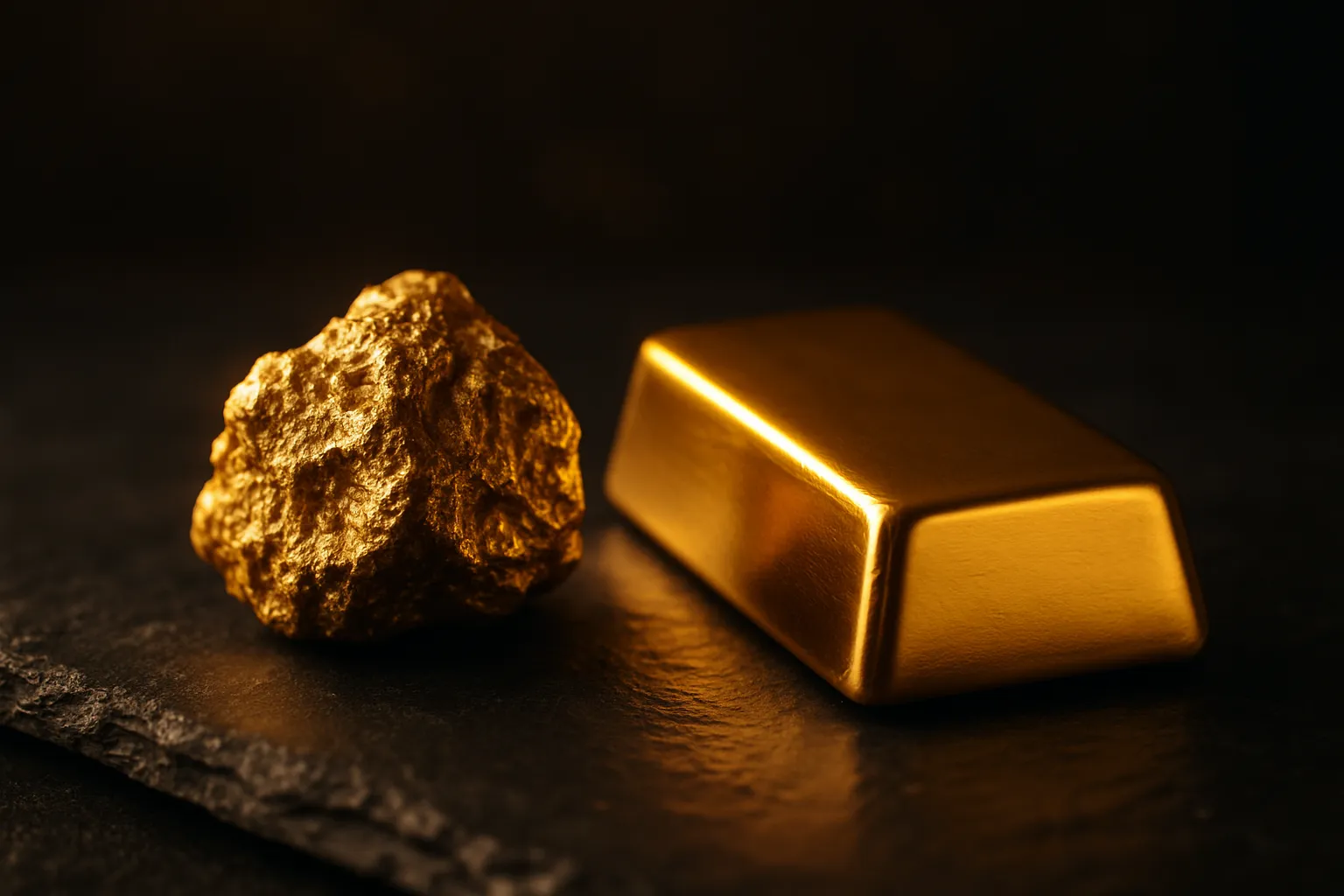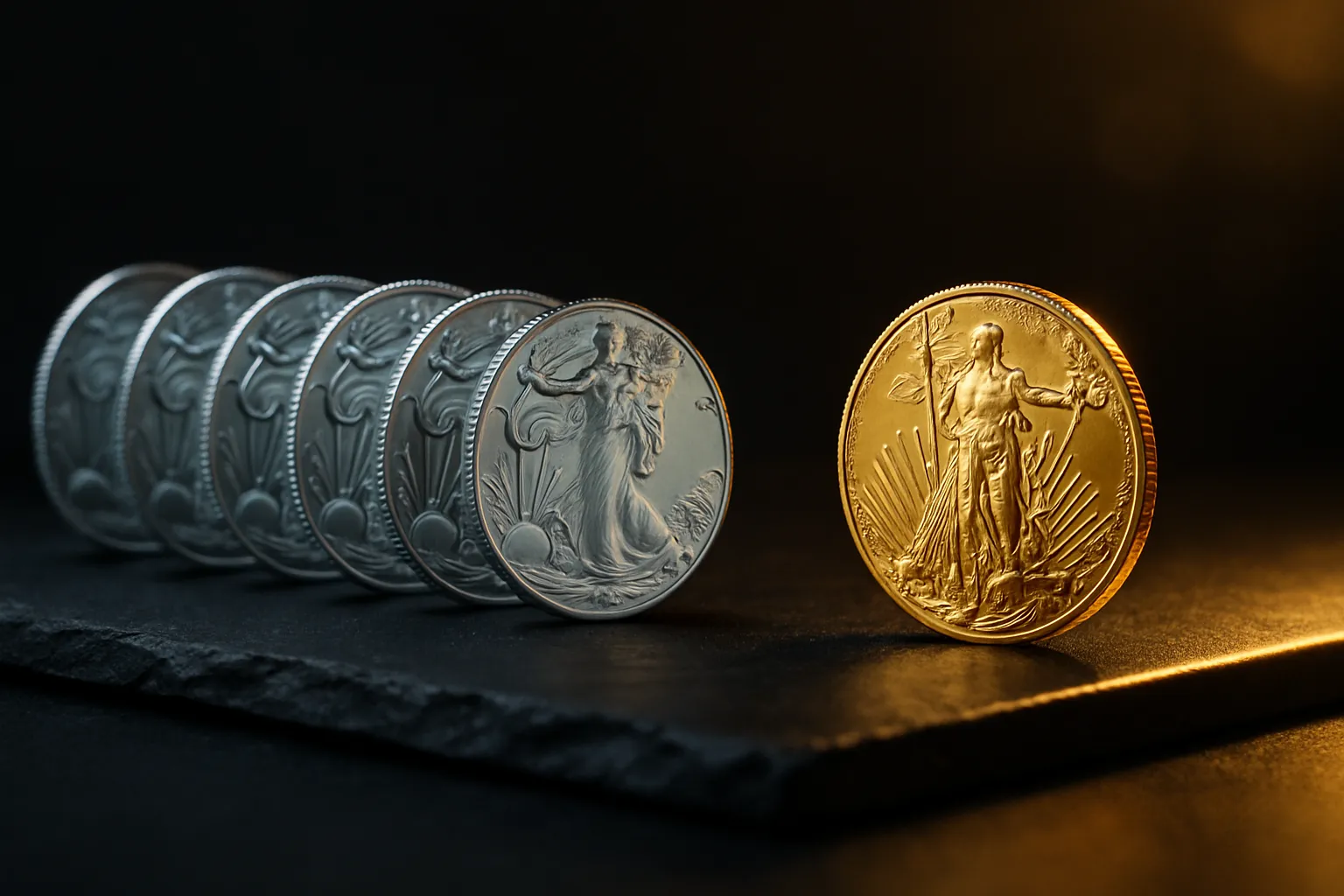
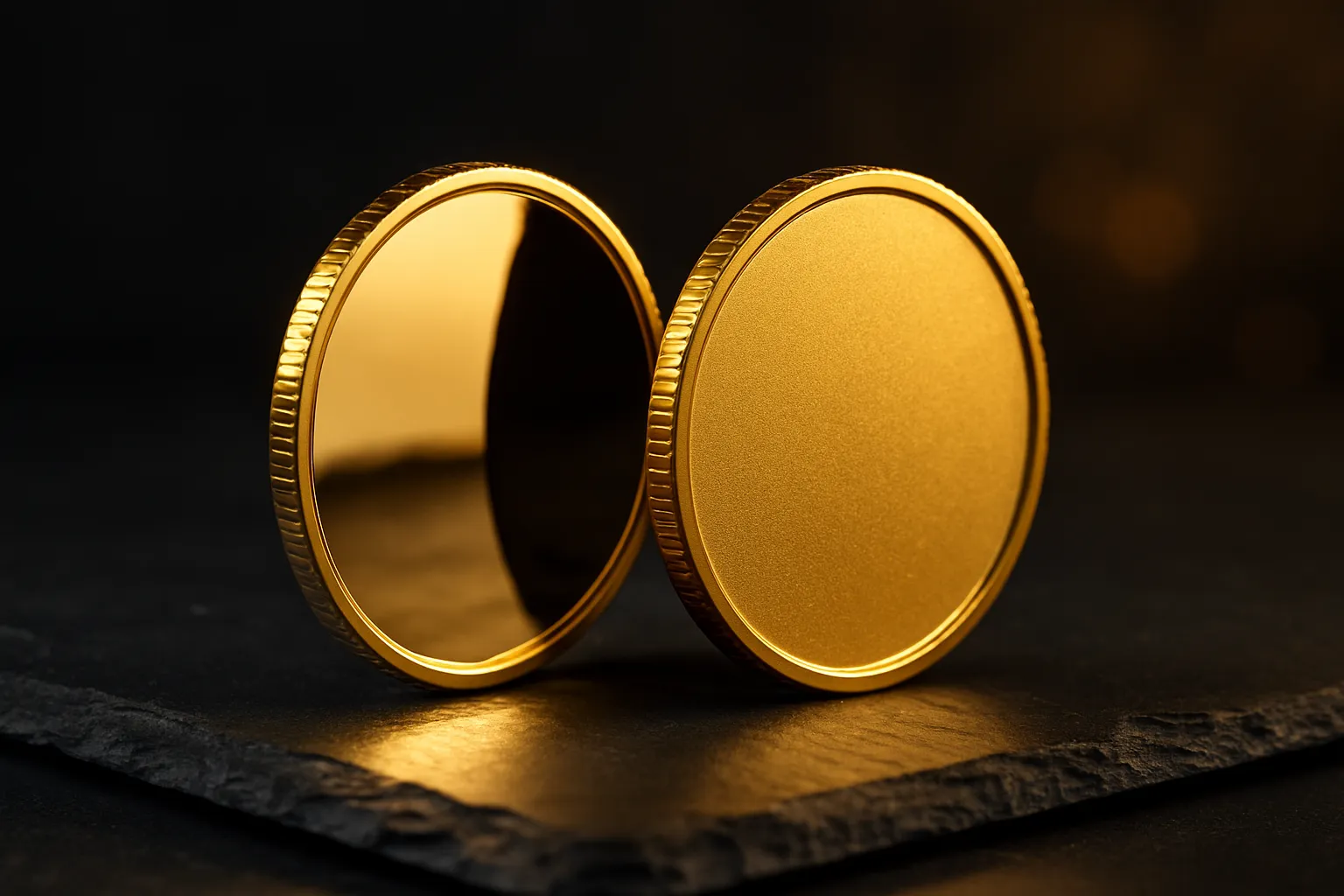
Two American Gold Eagles, both one ounce, both .9167 fine, both struck by the US Mint. One costs 5% over spot. The other costs 50%. The difference isn't the gold — it's the finish, and whether you understand what you're paying for is the single most expensive decision a new gold buyer makes.
The three finishes
Bullion (BU)
Struck at high speed in an automated press to meet investor volume. Valued by weight and fineness, not rarity. Retains full original mint lustre, sold at the lowest premium over spot. On US Eagles, bullion strikes carry no mint mark.
This is what "buying gold" means for almost everyone.
Proof
Struck from hand-polished dies onto hand-fed, polished planchets, and struck multiple times. The result is a glass-like mirror field with white frosted raised devices — the "cameo" contrast a bullion strike can't replicate. Mintages run far below bullion. Ships in a presentation case with a numbered Certificate of Authenticity. US proofs carry the W mint mark (West Point).
Burnished / Uncirculated
The middle option. Burnished blanks hand-loaded and struck at higher pressure using a proof-like process, but without the polish — producing a soft matte or satin finish. Confusingly, these also carry the W mint mark, so check the description rather than the mark alone.
The premium gap, and the warning
One-ounce bullion coins in 2026 run roughly 3–7% over spot. Proof versions commonly run 30–70%+, and higher for current-year releases.
Here's the part that costs people money. Dealers buy back on metal content, not finish. Unless a proof is genuinely scarce or in a top grade, most dealers will bid it near bullion value. As one UK bullion dealer puts it bluntly: you may pay a large premium above the intrinsic gold value, but on disposal the price tracks gold — meaning the gold price might need to rise on the order of 80% just for you to break even.
Numismatic coins also carry the widest buyback spreads of any category, because the dealer has to price in inventory risk and a thinner resale market. And there's a structural headwind: as metal prices have risen, collector premiums have been compressing — rising melt value absorbs the numismatic component.
When a proof genuinely is worth it
None of the above makes proofs bad. It makes them a different product. They're worth buying when:
- You're a collector. The premium buys craftsmanship and scarcity. That's a legitimate thing to want.
- The mintage is genuinely low — key dates, first or final year issues, where the proof run is a fraction of the bullion run.
- It's graded. PCGS or NGC slabbed PF70 Ultra Cameo or MS70 coins trade in their own market where grade sets price. Note the risk cuts both ways: a downgrade takes the premium with it.
- It's a gift. The box, the certificate and the mirror finish are the product.
The handling rule that protects the value
Never touch the surface. Skin oils etch a proof's mirror field permanently, and the damage is effectively irreversible. Handle by the edge, or better, don't handle it at all — leave it in the capsule.
Keep the original capsule, outer box and numbered COA together. A proof offered "capsule only, no box or paperwork" fetches materially less, and some dealers price it as a damaged bullion coin. And never clean a proof: graders detect it instantly and it destroys grade eligibility.
The same principle applies to sealed Panda packaging and bar assay cards — with premium products, the packaging is part of the asset.
The practical rule
Buy bullion strikes for metal exposure — lowest premium in, tightest spread out, easiest to sell anywhere. Treat proofs as collectibles funded from a separate budget, bought because you want to own them rather than because you expect them to beat gold.
Most importantly, don't mix the two in your portfolio maths. Your gold allocation should be measured in ounces held, not in what you spent. A collection of proofs bought at 50% premiums represents far less metal than the invoice total suggests.
What to buy instead, if metal is the goal
If you want gold exposure, the low-premium bullion strikes are the tool: Krugerrand, Maple Leaf, Philharmonic, and for UK buyers the CGT-free Britannia. For the cheapest metal per pound spent, kilo bars win outright — see our lowest-premium guide.
Bitgolder sells bullion-strike coins and bars from sovereign mints and LBMA-accredited refiners, priced live against spot with a transparent premium — payable in Bitcoin, Monero, stablecoins and 30+ coins, shipped insured and unmarked. Browse the gold range or read how it works.
Frequently asked questions
What is the difference between proof and bullion coins?
Bullion coins are mass-struck for metal value and sold at a small premium over spot. Proof coins are struck several times from hand-polished dies onto polished blanks, giving a mirror field and frosted design, and are sold in limited numbers at a large collector premium.
Are proof gold coins a good investment?
As gold exposure, generally no — you pay a large numismatic premium that dealers rarely repay. As collectibles, low-mintage or highly graded proofs can perform, but that is a collecting decision with different risks and lower liquidity.
Do proof coins hold their value?
They hold their gold value, which tracks spot. The collector premium is the part at risk — most modern proofs are bought back near bullion value unless the issue is genuinely scarce or in a top grade.
What does BU mean on a coin?
Brilliant Uncirculated — a standard bullion strike that has never circulated and retains full original mint lustre. It is not a proof, and not the US Mint's burnished uncirculated W issue.
Should I buy proof or bullion gold?
Bullion, if the goal is owning gold. Proof only if you specifically want the collectible and accept that a large share of the price is not metal. Never mix the two in your portfolio maths — measure your allocation in ounces, not spend.
Why should you never touch a proof coin?
Skin oils permanently etch the mirrored field and the damage is effectively irreversible. Handle by the edge or leave it in the capsule, keep the box and certificate together, and never clean it — graders detect cleaning and it destroys grade eligibility.
Ready to buy gold with crypto?
Browse 400+ LBMA-certified coins and bars, priced live and shipped fully insured.
Shop the vault