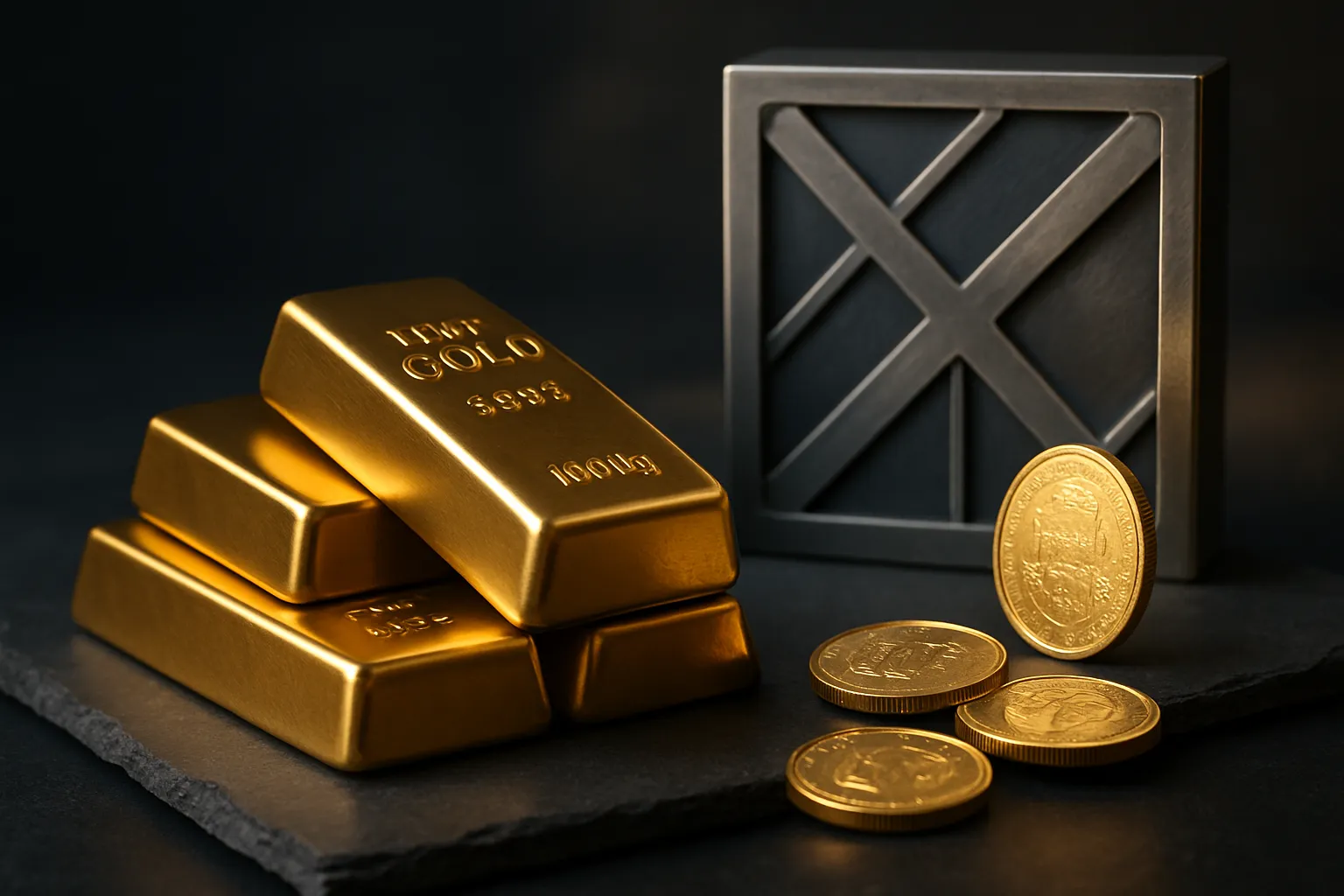
Gold Scams in 2026: Counterfeits, Inflated Premiums & How to Verify
Most people worry about the wrong gold scam. They picture a shady bar with a tungsten core, and they are right that those exist — but the money lost to counterfeit metal is dwarfed by the money lost to perfectly genuine coins sold at two or three times what they are worth.
Both are worth knowing. Here is how each one works in 2026, and the checks that catch them.
The counterfeit problem
Tungsten and lead cores
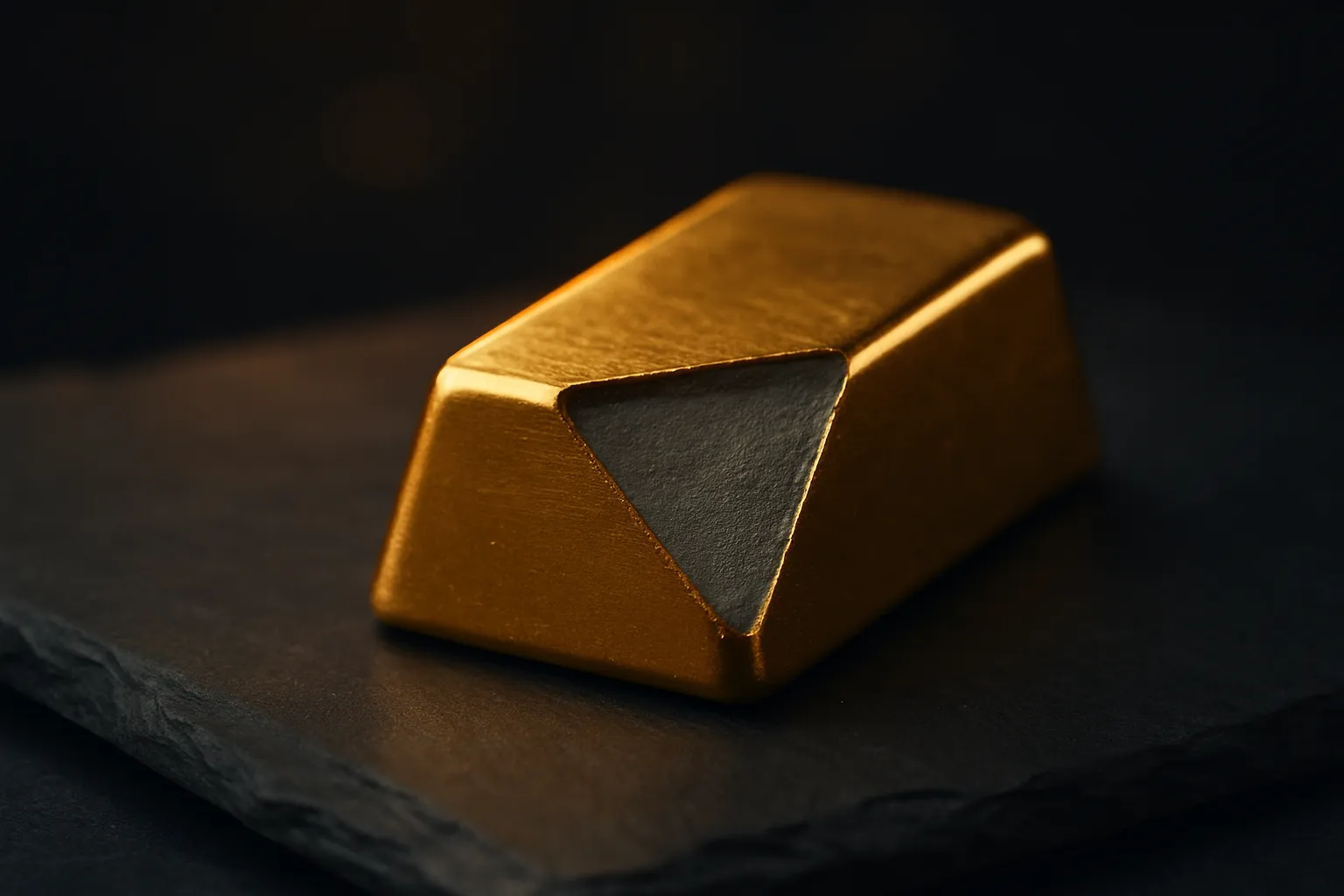
The technically serious fake. Tungsten's density is 19.25 g/cm³ against gold's 19.30 — close enough that a gold-plated tungsten bar passes a weight-and-dimensions check that would catch almost any other substitute. Lead-cored fakes are cruder but cheaper to produce in volume.
These carry false hallmarks and forged refinery stamps, frequently good enough that an untrained eye cannot separate them from genuine product. Larger bars are the favoured target, because a bigger casting hides more filler.
Where they circulate
Counterfeits concentrate where there is no accountable counterparty: peer-to-peer marketplaces, unproven sellers on auction sites, social-media direct messages, and private cash sales arranged by strangers. An established dealer buying from LBMA-accredited refiners and reselling under its own company registration has an entire business to lose; an anonymous seller has nothing at stake.
Metal that does not exist, or is not yours
Two paper versions worth naming. Non-delivery: payment taken, delivery deferred, free "storage" generously offered. There is no bar, and the structure survives on new deposits until it doesn't. Unallocated certificates sold as though they were allocated holdings: you are an unsecured creditor of the issuer, not the owner of specific metal. Both are legal-looking and both leave you with nothing if the issuer fails.
The bigger drain: the 50–100% markup
This is where most retail money actually goes, and it usually arrives wearing a suit rather than a hoodie.
Telemarketers and "rare coin advisers" routinely mark coins up 50–100% or more over melt value, justified with a story about rarity, confiscation risk, or numismatic upside. The coin is very often a common-date bullion piece or a low-grade semi-numismatic with no meaningful scarcity at all. The metal is real. The price is fiction.
The tell is the pitch, not the product:
- You did not initiate contact. Cold calls and unsolicited emails about gold "allocations" are close to definitional.
- Manufactured urgency. "Limited allocation", "price rises at midnight", a deadline that exists only in the conversation.
- Confiscation narratives. The claim that certain coins are exempt from government seizure is a sales device, not a legal fact.
- Pressure instead of education. Reputable dealers explain premiums and let you leave. High-pressure tactics are consistently associated with overpriced or unsuitable products.
To sanity-check any offer, you need to know what ordinary product costs. Common bullion coins typically carry 5–7% over spot; large bars carry 2–4%. Anything above roughly 10% on common bullion needs a specific explanation, and 50%+ on a coin described as "rare" almost never survives one. Our guide to premiums by product sets out realistic bands, and MS69 vs MS70 covers why graded "perfection" rarely justifies its own premium either.
Red flags, in order of reliability
- Unsolicited contact with urgency attached. The single most consistent marker across both scam types.
- No verifiable trading history. No company registration number, no physical address, no track record. Check what they can actually point to — LBMA accreditation of the refiners they stock is a reasonable minimum.
- Payment methods with no recourse. Gift cards, wires to a personal account, cash by courier. Legitimate dealers accept traceable settlement.
- A rarity story attached to a common coin. Look the coin up. Mintages are public.
- Vagueness about the product itself. A real listing states refiner, weight, purity and form. "Gold bar, 1 oz" with no maker named is a warning.
- Peer-to-peer marketplaces. Not inherently fraudulent, but they concentrate counterfeit risk because nobody is accountable afterwards.
Verifying before you pay
Three checks, in order of how little they cost you.
Free — check the seller. Company registration, a real address, a trading history, and reviews on a platform the seller does not control. Established dealers publish all four without being asked.
Free — check the price against the market. Compare the offer to live spot and work the premium out as a percentage. This is how you catch the markup scam, which is the one most likely to cost you money.
Cheap — check the metal. Dimensions to the tenth of a millimetre, weight to the tenth of a gram, the ping test, and a neodymium magnet slide. Gold is strongly diamagnetic, so a magnet slid down a genuine bar decelerates visibly; tungsten does not behave the same way. Our bar authentication guide covers the method and the testing guide goes further.
For higher-value pieces, buy products with verification built in — PAMP's Veriscan, the Royal Canadian Mint's Bullion DNA, Sunshine's MintMark SI. And if you are buying graded coins, always verify the certificate number against PCGS or NGC's own database directly, because counterfeit slabs exist alongside counterfeit coins.
Where real savings come from
Being cautious does not mean paying list price. Legitimate discounts exist; they simply come out of the dealer's premium rather than out of thin air:
- Bigger units. A kilo bar carries a far lower premium per ounce than thirty-two 1 oz coins — the largest saving available to most buyers. See our kilo bar guide.
- Volume tiers. Many dealers publish quantity breaks starting as low as 10 or 20 pieces.
- Payment method. Card processing costs a dealer roughly 3%; bank transfer, ACH and crypto avoid it, and most dealers pass that back.
- Secondary-market stock. "Mixed years" or "any mint" bullion is genuine metal at a lower premium because it was bought back rather than ordered from a mint.
- Negotiation at size. Past roughly $100,000, premium becomes a conversation rather than a menu price.
We break these down properly in how bullion discounts actually work.
The short version
- Counterfeits are real but narrow — mostly plated tungsten or lead, concentrated in peer-to-peer sales.
- Inflated premiums cost buyers far more — 50–100% markups on ordinary coins sold as rare.
- Know the baseline: 5–7% over spot on common bullion, 2–4% on large bars.
- The pitch gives it away — unsolicited contact, urgency, confiscation stories, pressure.
- Verify the seller first, the price second, the metal third. The first two are free.
Bitgolder shows the premium over live spot on every product before you pay, on LBMA-refiner gold and silver. Company registered in England & Wales, with verified reviews on a platform we do not control. Payable in Bitcoin, Monero, stablecoins and 30+ coins, shipped insured and unmarked — see how it works.
General information, not investment advice. Spot quoted at $4,634.30/oz gold, 25 August 2026, and moves constantly. If you believe you have been targeted by a fraud, report it to your national action-fraud body.
Ready to buy gold with crypto?
Browse 400+ LBMA-certified coins and bars, priced live and shipped fully insured.
Shop the vault