Silver Bar Brands & Refiners Compared 2026: Metalor, Umicore, Germania & More
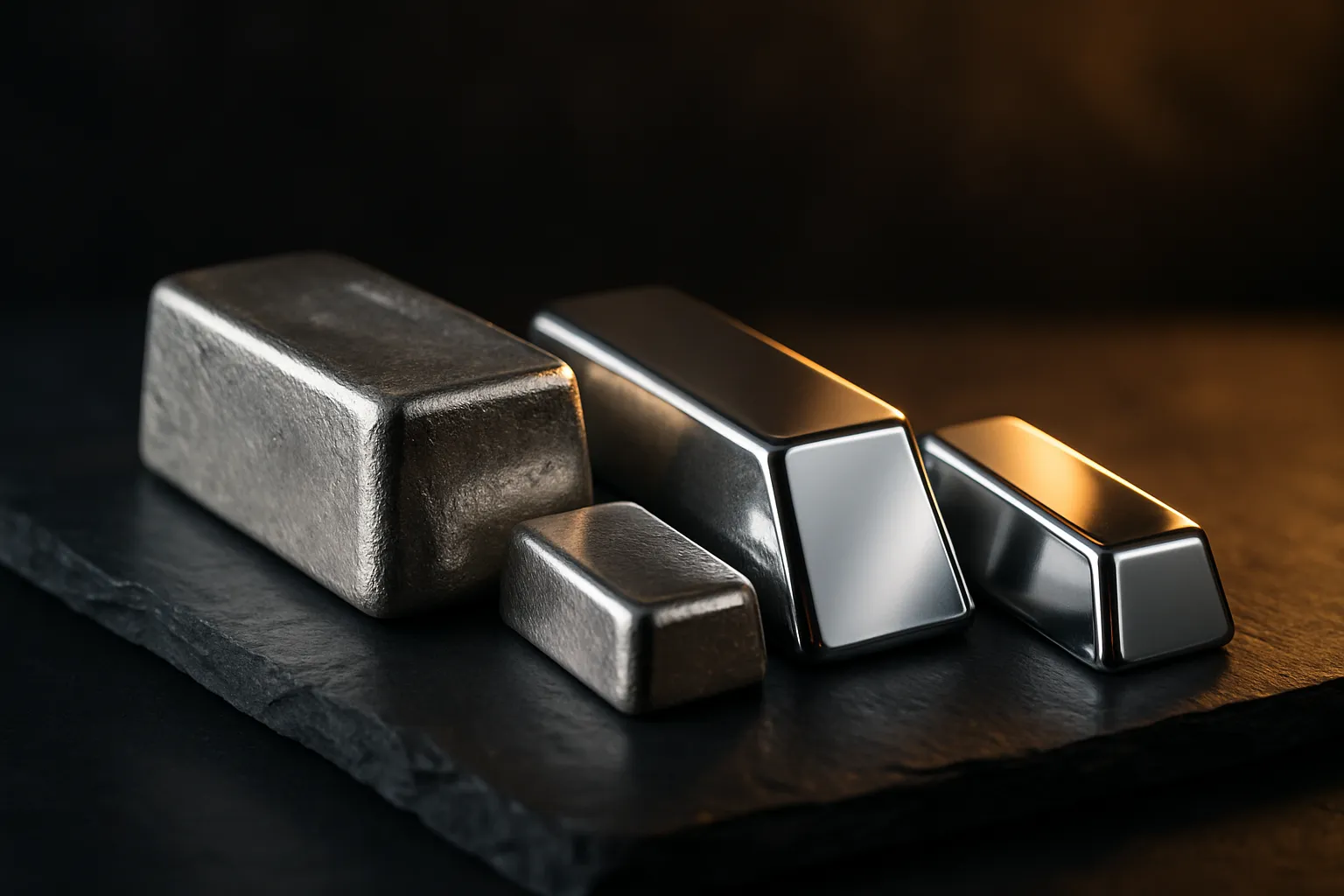
Ask which gold bar to buy and everyone has an opinion about PAMP's Lady Fortuna. Ask which silver bar to buy and the conversation goes quiet, because silver is where the branding matters least and the arithmetic matters most. A 1 kg silver bar holds roughly $2,224 of metal at today's $69.18 spot. The refiner's logo is worth a few dollars of that. The tax treatment is worth four hundred.
This is the honest comparison: who actually refines the silver you can buy, which names carry real resale weight, and where the premium goes.
LBMA accreditation: the silver list is not the gold list
The single most misread fact in silver bars. The London Bullion Market Association maintains two separate Good Delivery Lists — one for gold, one for silver — and a refiner accredited for one is not automatically accredited for the other.
There are currently 81 refiners on the silver Good Delivery List against 71 on the gold list. So silver accreditation is, if anything, slightly broader. But the overlap is imperfect, and "LBMA approved" on a product page rarely says for which metal.
A worked example: Umicore's silver refinery in Thailand was added to the silver Good Delivery List with effect from 21 November 2014 — a separate accreditation from its Belgian gold operation. Two facilities, two listings, one brand name on the bar.
One rung above the list sits the Good Delivery referee panel — the handful of refiners the LBMA itself uses to assay and check other refiners' bars. Metalor Technologies is on that panel. If you want a single objective marker of refining credibility, that is the one that means something, and almost no retail listing mentions it.
Worth being clear about what accreditation does and does not buy you: as we explain in what LBMA Good Delivery actually means, the standard governs large wholesale bars — for silver, roughly 750–1,100 oz. Your 1 kg bar is not a Good Delivery bar. What accreditation tells you is that the refiner meets the standard, which is a genuine signal about assay reliability and a meaningless one about the specific bar in your hand.
The refiners, compared
| Refiner | Base | Silver GDL | Sizes | Notes |
|---|---|---|---|---|
| Metalor | Switzerland | Yes — referee panel | 1 oz–1 kg cast & minted | Highest institutional standing of any name here |
| Umicore | Belgium / Thailand | Yes (Thailand, 2014) | Stamped 10–100 g; cast 250 g–15 kg | Widest size range; industrial heritage, plain packaging |
| Valcambi | Switzerland | Yes | 1 oz–1 kg, CombiBar | Strongest brand recognition in Europe |
| PAMP Suisse | Switzerland | Yes | 1 oz–1 kg cast & minted | Best-known retail brand; you pay for it |
| Royal Canadian Mint | Canada | Yes | 10 oz, 100 oz, 1 kg | Sovereign mint; deep North American liquidity |
| Sunshine Minting | USA | Yes | 1 oz–100 oz | MintMark SI anti-counterfeit; US-market default |
| Geiger Edelmetalle | Germany | Yes | Square bars, 1 oz–1 kg | Distinctive square format; collector following |
| Germania Mint | Poland | Not on the list | Cast 250 g–1 kg+ | Tier-two: good value, easy resale, wide acceptance |
| Scottsdale Mint | USA | Yes | 10 oz–1 kg cast | Distinctive "stacker" cast look |
| StoneX Bullion | UK/Germany | Distributor, not refiner | Coin bars, kilo bars | Formerly CoinInvest — rebranded July 2023 |
Two clarifications that trip people up. Germania Mint is not on the LBMA silver list — it is a well-regarded tier-two producer, which is fine for stacking and slightly weaker on institutional resale, but it is not the same credential. And StoneX is a dealer, not a refiner: if you searched "StoneX silver bar", what you found was a bar produced by someone else and distributed under the StoneX name. It is the former CoinInvest, rebranded in July 2023.
Premiums: size beats brand, decisively
This is where silver differs sharply from gold. Brand premium spreads in silver are a couple of percent. Size spreads are ten or more.
- 1 oz bars: the worst value per ounce. You are paying to have the same metal cut into 32 pieces.
- 100 g – 250 g: still premium-heavy, roughly 10–18% over spot.
- 1 kg: the sweet spot for most buyers. Competitive with 10 oz bars and sometimes lower.
- 100 oz: premiums drop to roughly $0.80–$1.50 per ounce over spot — about 2–5%, the lowest of any retail-accessible size.
- 5 kg – 15 kg: lowest headline premium, and the point where liquidity starts working against you.
At $69.18 silver, a 100 oz bar at a $1.20/oz premium costs about $7,038 against $6,918 of metal — a 1.7% spread. The same 100 ounces bought as 1 oz bars at 15% would cost roughly $7,955. That $917 difference is the entire argument for buying big, and it dwarfs every brand consideration on this page.
The large-bar catch nobody mentions
Big bars are cheap going in and awkward coming out. A 5 kg or 15 kg bar cannot be sold in parts — you liquidate all of it or none of it. Fewer dealers quote on them, shipping is expensive and heavily insured, and a private buyer for a 15 kg bar is a rare animal. The premium you saved is real; so is the spread you will pay to exit. Our 10 kg silver bar guide goes into the practicalities.
Anti-counterfeit features worth paying for
Silver is counterfeited more than gold in absolute unit terms, precisely because it is cheap enough to fake in volume.
Sunshine Minting's MintMark SI is the most practical retail defence: a laser-etched mark that shows a hidden image when viewed through a proprietary decoder lens. Simple, binary, no equipment beyond the lens.
Geiger's square bars defend by format — the dimensions and edge finish are hard to replicate convincingly, and a square bar of the wrong thickness is obvious in the hand.
For everything else the physical checks are your friend: correct dimensions to the tenth of a millimetre, correct weight to the tenth of a gram, and silver's distinctive high-pitched ring. Silver is also strongly diamagnetic, so a neodymium magnet slid down a bar decelerates visibly — a test lead and tungsten fakes fail badly. Our bar authentication guide covers the method properly.
Tax: the number that dwarfs everything above
Choose your refiner carefully and you might save 2%. Get the tax wrong and you lose 20% on day one.
Investment gold is VAT-exempt across the UK and EU. Silver is not. Silver is treated as an industrial commodity, so VAT is mandatory: 20% in the UK, 19% in Germany.
Do the arithmetic honestly. A 20% VAT charge on top of even a modest 5% premium puts you roughly 26% above spot on day one, and you sell at or near spot. Silver has to rise about a quarter before you are level. That is the single most important fact about silver bars, and most brand comparisons omit it entirely.
Two things that used to help, and one that still does:
- Germany's margin scheme closed. Since 1 January 2025, §25a Abs. 7 Nr. 1 lit. c UStG blocks Differenzbesteuerung where the previous supply used the reduced rate — killing the old model of importing silver at 7% and reselling under the margin scheme. Newly imported silver now bears the full 19%.
- Bars are never CGT-exempt in the UK. Only UK legal tender qualifies, which means coins. A Silver Britannia is outside Capital Gains Tax; a 1 kg Metalor bar is not. If you are building a large UK position, that argues for Britannias over bars regardless of premium.
- Bonded storage still works. Silver held in a bonded warehouse or free-trade zone (Zurich, the Channel Islands) can be bought without VAT while it remains there; VAT falls due on import. That removes the 20% drag at the cost of storage fees and counterparty risk, and it confers no CGT relief.
US buyers: no VAT. Sales tax varies by state and many exempt bullion outright. Federally, physical silver is a collectible taxed at up to 28%.
So which bar should you actually buy?
Buying for ounces, storing at home, non-UK: the largest bar you are comfortable liquidating in one piece. 1 kg for most people, 100 oz if you are committed. Refiner: whichever LBMA-listed name is cheapest on the day — Umicore and Metalor are usually the value picks precisely because they market least.
UK resident building a real position: reconsider bars. The CGT exemption on Britannias is worth 18–24% of your gain, which no premium saving can match.
Want the strongest institutional credential: Metalor, on the strength of the referee panel.
Want maximum verification with no tools: Sunshine with MintMark SI, or Geiger squares.
Want the widest size ladder from one refiner: Umicore — 10 g stamped through 15 kg cast.
And if the 20% VAT is what stops you, that is a legitimate reason to weight toward gold, which carries none. Our gold-to-silver ratio guide is the sensible way to think about the split.
Bitgolder stocks silver bars from Metalor, Umicore, Valcambi, PAMP, Germania, Geiger, RCM, Sunshine and StoneX, from 100 g to 10 kg. Browse silver, payable in Bitcoin, Monero, stablecoins and 30+ coins at a transparent premium over live spot, shipped insured and unmarked. See how it works.
General information, not tax advice. Spot prices quoted at $69.18/oz silver, 24 August 2026, and move constantly. VAT rules and allowances change — confirm your position before buying at size.
Ready to buy gold with crypto?
Browse 400+ LBMA-certified coins and bars, priced live and shipped fully insured.
Shop the vault