MS69 vs MS70 Explained (2026): PCGS, NGC & Whether Graded Coins Are Worth It
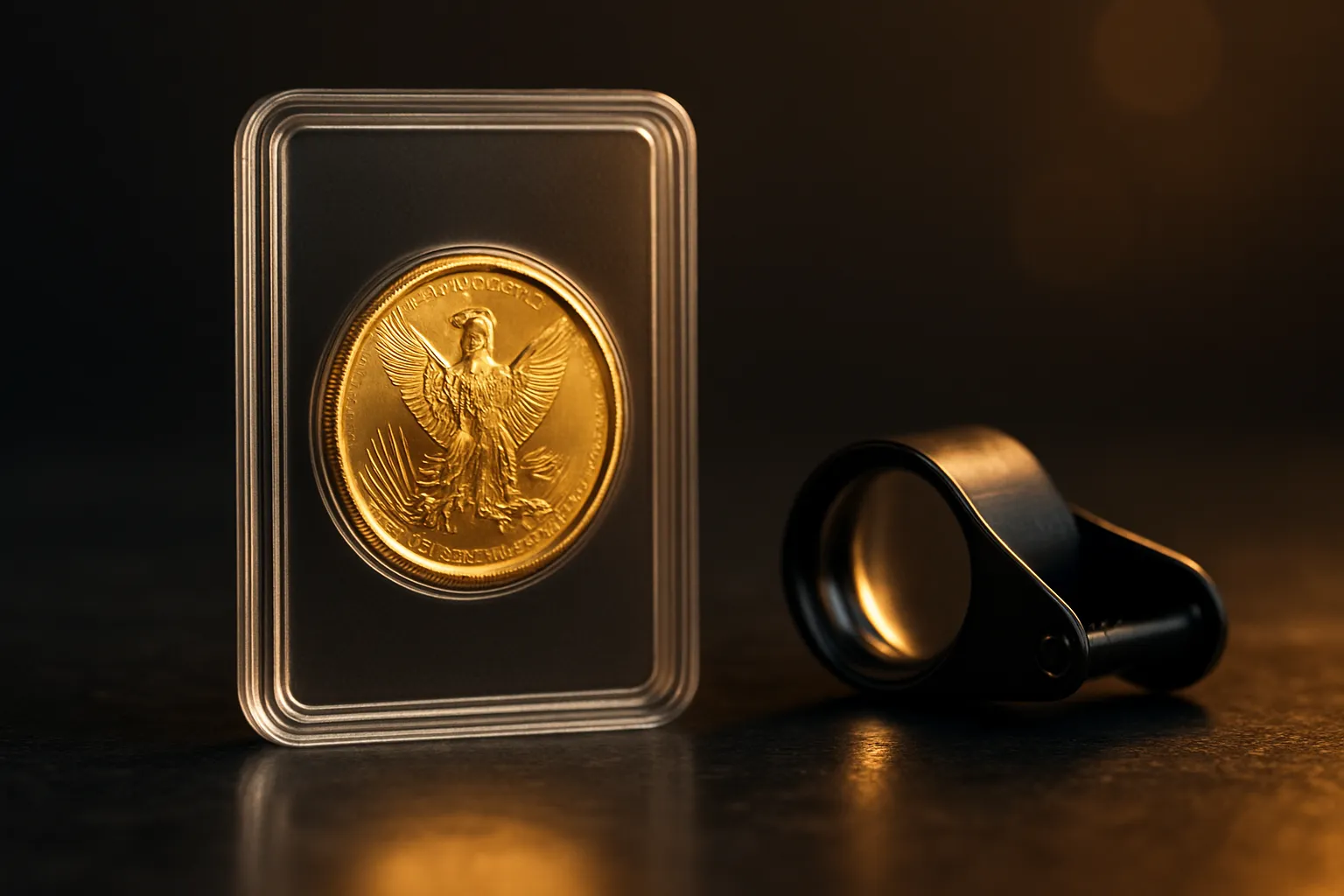
You are looking at two identical American Gold Eagles. Same year, same mint, same ounce of gold. One is loose in a capsule at roughly $4,833. The other sits in a plastic slab marked MS70 and costs about $135 an ounce more. The metal is indistinguishable. The difference is one number assigned by a stranger with a loupe.
Whether that number is worth paying for depends entirely on why you are buying — and the honest answer for most bullion buyers is no. Here is the arithmetic.
The 70-point scale, briefly
Coin grading uses the Sheldon scale, running 1 to 70. Modern bullion coins arrive from the mint uncirculated, so in practice only the top of the range matters:
- MS60–MS63: uncirculated but visibly marked — bag marks, contact scuffs.
- MS64–MS66: above-average, minor marks in secondary areas.
- MS67–MS68: very few flaws, strong lustre.
- MS69: effectively flawless to the naked eye. One or two microscopic imperfections.
- MS70: no imperfections whatsoever under 5× magnification, full original mint lustre. Theoretical perfection.
MS means Mint State — a business-strike bullion coin. PF or PR means proof, a different manufacturing process rather than a better grade; a PF70 and an MS70 are both perfect examples of different things. We cover that distinction separately in proof versus bullion coins.
The gap between MS69 and MS70 is genuinely tiny. As one dealer summary puts it, an MS69 gives you 95% of the quality at a fraction of the price — and that is the whole debate in a sentence.
PCGS versus NGC
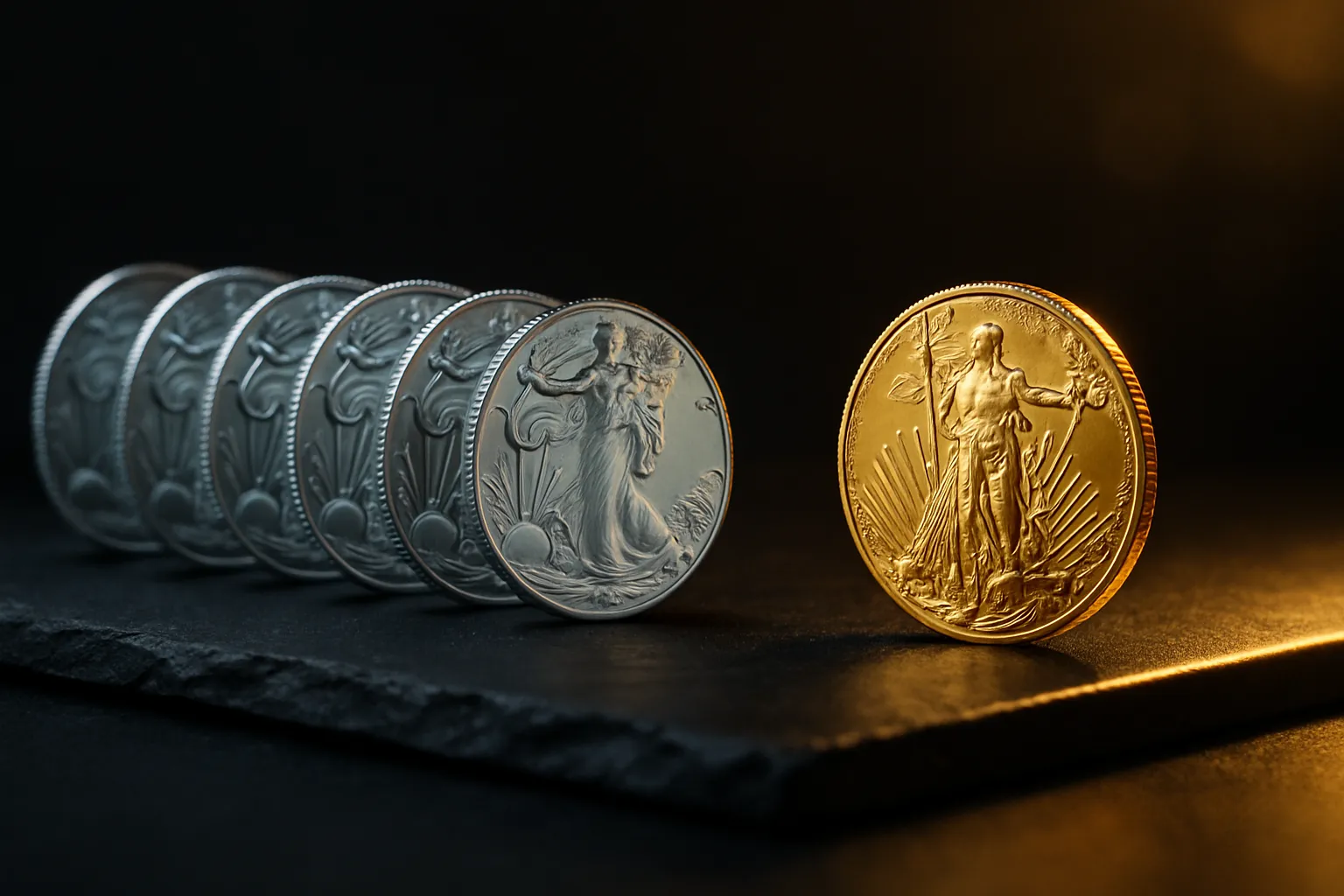
Two firms dominate: PCGS (Professional Coin Grading Service) and NGC (Numismatic Guaranty Company). Both are credible, both are widely accepted, and both command real market trust. Below them sit ANACS, ICG and CGC, which grade competently but consistently fetch lower prices for the same stated grade — a market-confidence discount rather than a quality judgement.
Between the top two, PCGS has historically carried a small price advantage on classic US coins. On modern bullion, the two are close to interchangeable, and choosing on grading cost rather than resale premium is defensible.
What grading actually costs in 2026
| Service | NGC | PCGS |
|---|---|---|
| Economy | $20 · 60 days | $22–30 · 45–70 days |
| Modern / Regular | $30 · 25 days | $30–40 · 25–35 days |
| Express | $60 · 10 days | $65–150 · 10–15 days |
| WalkThrough | $125 · 5 days | — |
NGC runs roughly $5 cheaper per tier with slightly faster turnaround. But the sticker fee is not the cost. Add:
- Membership — required for direct submission to either firm.
- $10 handling fee per submission.
- Return shipping: $28–$150, depending on declared value and insurance.
Which is why the practical figure is not the advertised $20. Realistically you are spending $50–$100 per coin once shipping and insurance are in. On a single 1 oz Gold Eagle that is 1–2% of the coin's value spent on a plastic holder — and you have no guarantee of the grade you are paying to discover.
The premium, in real numbers
Current market data on graded American Eagles:
- 1 oz American Gold Eagle, MS70: roughly $135 per ounce over spot.
- 1/2 oz American Gold Eagle, MS69: roughly $100 per item over spot.
- First Strike (PCGS) or Early Releases (NGC) labels add a further 10–30% to the premium.
At today's $4,646.80 gold, a $135/oz MS70 premium is about 2.9% over spot on top of the ordinary dealer premium. That is not outrageous. The question is whether it comes back.
Does the premium survive resale?
Mostly not, for modern bullion. Three reasons:
Population. Modern minting is extremely consistent, so MS70 populations for recent bullion issues run into the tens of thousands. A grade shared with 40,000 other coins is not scarcity, and scarcity is what pays.
The buyer pool inverts. A graded slab appeals to collectors. But the deepest, most liquid market for a 1 oz Gold Eagle is bullion buyers, who price on metal content and are indifferent to the plastic. Sell into that market and the slab is worth nothing. Sell into the collector market and you wait longer for a narrower audience.
Slabs do not travel. Ship a graded coin internationally and the holder adds bulk, insurance value and customs attention without adding metal.
There is a genuine counter-case, and it is worth stating. Gold Eagles in particular are notoriously hard to grade MS70 — the design and packaging produce contact marks readily, so true MS70 populations are far thinner than for, say, Maple Leafs. Where the population genuinely is low for a specific year and grade, the premium has historically held. That is a numismatic bet on one date, not a general property of grading.
Where grading does make sense
- Genuinely scarce dates. A 1999 proof Krugerrand or an early Krugerrand in top grade is a numismatic asset. Grading authenticates and prices it.
- Selling remotely to strangers. A slab is a portable, third-party guarantee of authenticity and condition. If you sell online to buyers who cannot inspect the coin, that is worth real money.
- Estate and probate clarity. A graded, catalogued holding is far easier for an executor to value and sell than a box of loose coins — a point we make in inheriting gold.
- High-value single pieces where a $60 fee is a rounding error against a five-figure coin.
And where it does not: if you are buying ounces. Every dollar spent on grading a common-date bullion coin is a dollar not spent on metal. The r/Silverbugs regulars ask "do you care about graded bullion?" and "slabbed or unslabbed?" perpetually, and the stacker answer is consistently the same — for content, buy raw.
Practical cautions
Counterfeit slabs exist. Fake PCGS and NGC holders containing fake coins are a real problem. Both firms offer free online certificate verification — check the number against the database before paying a graded premium, every time.
Crack-out economics rarely work. Breaking an MS69 out to resubmit hoping for MS70 costs another fee, risks a lower grade, and destroys the original holder. The expected value is negative unless the price gap is very large.
"Gradeflation" is a live argument. Collectors have complained for years that standards have loosened, which would mean today's MS70 is not yesterday's. Treat it as unresolved, and treat population growth as the thing to actually watch.
The verdict
Buying gold for the gold: skip grading entirely. Buy bullion-grade coins or bars at the lowest premium you can find, and put the difference into more metal. Our lowest-premium guide is the right starting point.
Buying one special piece: a graded coin from PCGS or NGC is a reasonable purchase, provided you accept you are paying for the coin and not the ounce.
Considering sending coins in: assume $50–$100 all-in per coin and ask whether the realistic grade uplift exceeds that. For common modern bullion, it usually does not.
Bitgolder stocks both — ordinary bullion gold and silver at transparent premiums over live spot, plus a selection of graded MS69/MS70 and PCGS/NGC pieces for buyers who want them. Payable in Bitcoin, Monero, stablecoins and 30+ coins, shipped insured and unmarked. See how it works.
General information, not investment advice. Prices quoted at $4,646.80/oz gold, 24 August 2026. Grading fees and premiums change — confirm current figures with PCGS or NGC directly.
Ready to buy gold with crypto?
Browse 400+ LBMA-certified coins and bars, priced live and shipped fully insured.
Shop the vault