Ask “what currency holds its value against inflation” and the honest first answer is uncomfortable: none of them fully do. Every fiat currency loses purchasing power over time — the real question is which lose it slowest, and what has actually preserved value across decades. This is a look at the strongest currencies of 2026, why even they leak value, and why the oldest money of all keeps ending up in the answer. It is general information, not financial advice; prices can fall as well as rise.
Every fiat currency is leaking value
Start with the benchmark. A US dollar from 1971 — the year the gold standard was abandoned — is worth about 12 cents today; the dollar has lost roughly 88% of its purchasing power in that time. You don’t even need to go back that far: a dollar from 2020 is worth about 77 cents in 2026, nearly 30% of purchasing power gone in six years, the fastest burst since the early 1980s. The UK saw inflation peak at 11.1% in late 2022; Canada hit 6.8% for 2022; the US touched 9%. Holding cash “safely” in the bank still guarantees a slow, compounding loss. Inflation is a tax on savers, and it never really stops.
The strongest fiat currencies (and their catch)
Some currencies are simply better-behaved than others. They still lose value — but slower — and they can appreciate against weaker currencies.
The Swiss franc (CHF)
The standout hard fiat. Swiss inflation has run near zero (roughly 0.1–0.5%) into 2026, the franc appreciated around 13% against the dollar in 2025 and hit an 11-year high, and it carries a deep safe-haven reputation — it was legally gold-backed until 2000. The catch: even the franc loses a little value each year, and for a pound, dollar or Canadian-dollar saver, buying CHF swaps inflation risk for exchange-rate risk, which can reverse.
The Singapore dollar (SGD)
Singapore uniquely manages its currency against a trade-weighted basket rather than through interest rates, deliberately letting the SGD appreciate to offset imported inflation. It has been one of the world’s steadiest currencies. But it’s engineered for price stability, not to enrich foreign savers, and it’s still fiat.
The cautionary tale: the Norwegian krone
Norway has oil wealth and one of the world’s largest sovereign funds, yet the krone has been persistently weak. The lesson matters: national wealth or commodity backing does not guarantee a strong currency.
And the US dollar
Still the reserve giant at roughly 57–58% of global reserves — but that’s down from over 70% in 2000, a slow erosion, and reserve status hasn’t stopped the dollar losing most of its domestic purchasing power since 1971.
The theme: “strong” fiat loses value slowly and can rise against weaker peers — but chasing foreign currencies trades one risk (inflation) for another (FX).
Why currencies debase in the first place
It comes down to supply. When money is created faster than the economy grows, each unit buys less. US M2 money supply jumped about 41% in 2020–2021 — the fastest since the 1940s — and the 2022 inflation spike followed with the usual lag. Deficits funded by the printing press, and interest rates held below inflation, do the rest. At the extreme you get Venezuela (inflation in the hundreds of percent) or years of a collapsing Turkish lira. Same disease everywhere — printing outpacing output — just different severity.
Gold: the currency that can’t be printed
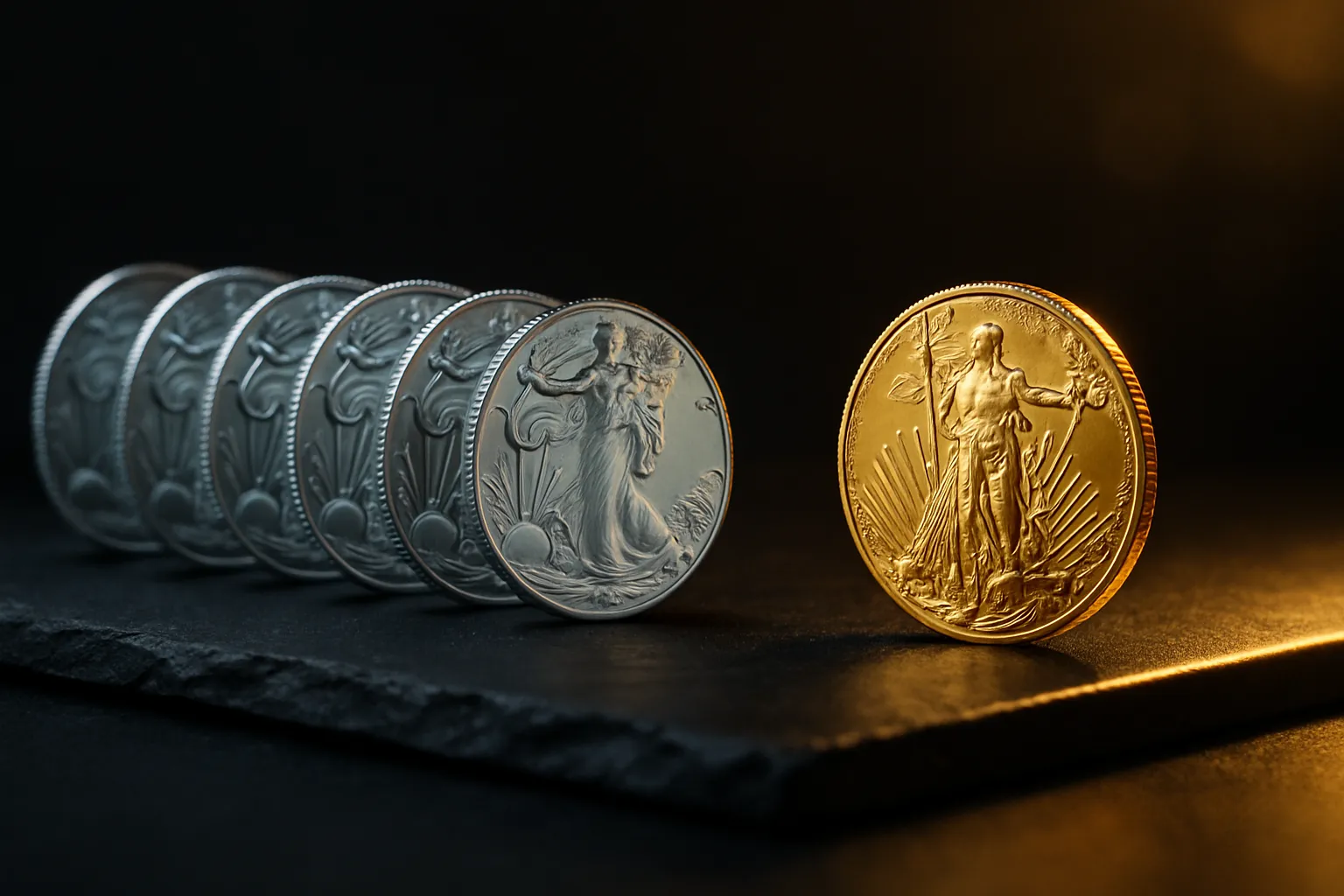
Which brings us to the asset that keeps surfacing whenever the question is “what actually holds value.” Gold has been money for around 5,000 years, it is nobody’s liability, and its supply grows only about 1.5–2% a year through mining. No central bank can conjure more of it.
Its record in inflationary eras is the argument. Through the 1970s, gold rose from $35 to a peak near $850 — well over a thousand percent — while US prices roughly doubled; it didn’t just track inflation, it crushed it. Over the whole period since 1971 it has outpaced US and world consumer prices. And the recent run has been extraordinary: gold climbed through 2024 and 2025 to an all-time high near $5,589 in January 2026 before correcting toward the $4,000–$4,200 range by mid-2026 (prices move fast — check the live gold price). The world’s central banks have voted with their reserves, buying over 1,000 tonnes a year for three straight years and citing gold’s role as a long-term store of value.
The honest caveat: gold pays no interest, it can be a poor short-term inflation hedge (it lagged for stretches of the 2010s), and it can fall hard — down about 25% from that January 2026 peak within months. Gold shines over decades and in crises, not necessarily quarter to quarter. It preserves and grows purchasing power over the long run precisely because it can’t be printed — but it is insurance, not a savings account.
What about Bitcoin?
Bitcoin’s fixed 21-million supply makes a genuinely strong long-run case as sound money, and over a decade it has vastly outperformed gold. But in 2025–2026 it traded like a high-beta tech stock — its correlation to the Nasdaq spiked, and it fell while gold hit records. Its volatility (often 45–60% a year, versus gold’s ~15%) undercuts its claim as a stable store of value today. Most strategists treat it as a small, high-risk satellite alongside a gold core. We weigh both sides in our gold vs Bitcoin for retirement guide.
What a saver can actually do
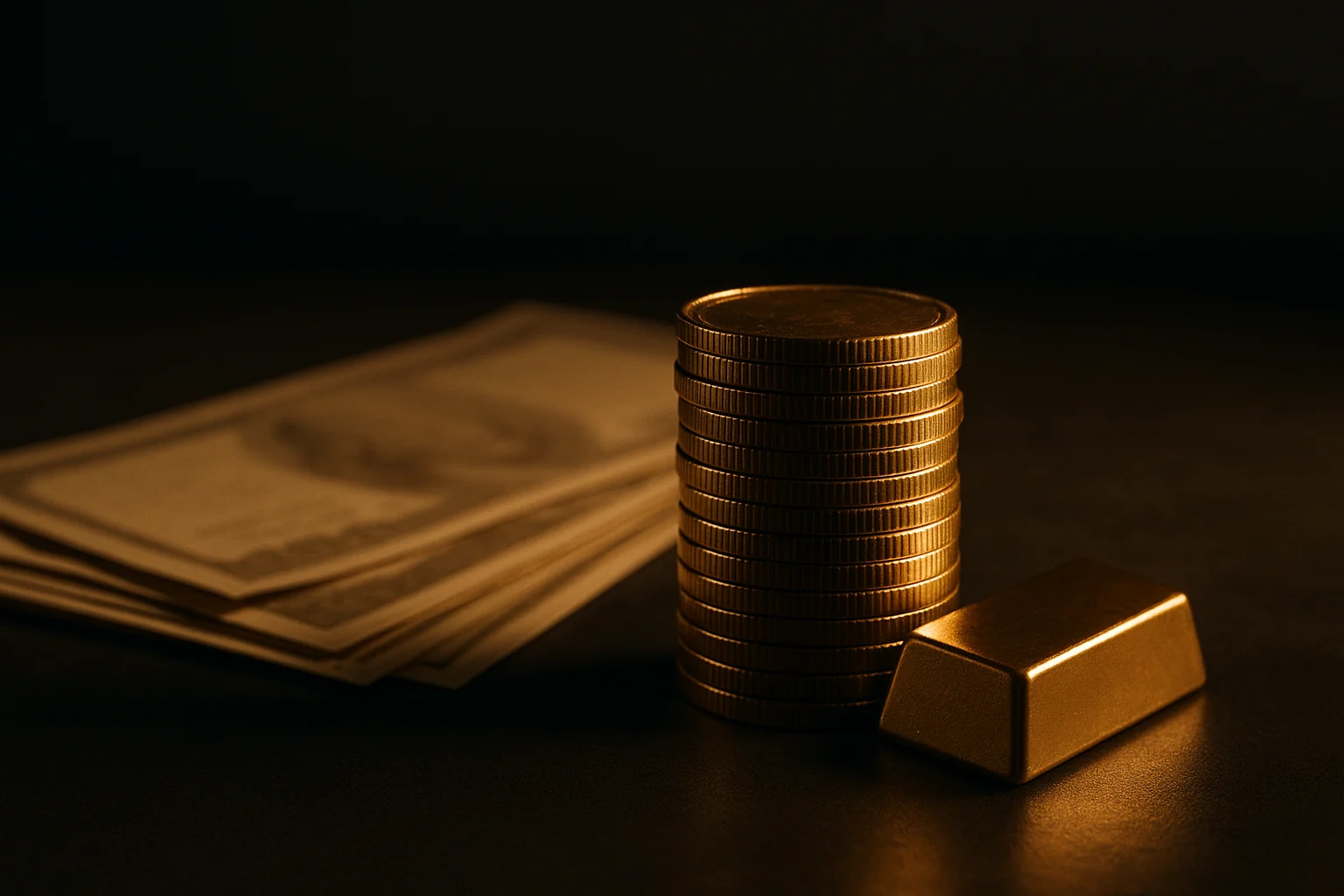
You can’t stop fiat debasement — it’s structural. But you can hold a portion of long-term savings in something that has historically outpaced inflation, while keeping cash for spending and emergencies. Inflation-linked bonds (TIPS, index-linked gilts) offer explicit protection but carry interest-rate risk; a basket of strong currencies spreads risk but adds FX exposure; and gold — the multi-millennia benchmark — can now be bought directly with crypto, letting you convert volatile fiat or volatile crypto into a 5,000-year-old store of value you physically hold. For the broader asset-class view, see our best inflation hedges guide; to put it into practice, browse the gold range. Not a recommendation — one option among several, and gold pays no yield and can fall.
Frequently asked questions
What currency holds its value best against inflation?
No fiat currency fully holds value. The Swiss franc has been the strongest major fiat — near-zero inflation and up about 13% against the dollar in 2025 — with the Singapore dollar close behind. But over decades, gold has preserved purchasing power better than any fiat currency.
Is the Swiss franc a good inflation hedge?
It’s the best-behaved major fiat, with low inflation and safe-haven status. But for a pound, dollar or Canadian-dollar saver it introduces exchange-rate risk, and it still slowly loses value.
Does gold beat inflation?
Over the long run, yes — it has outpaced US and world prices since 1971 and rose over a thousand percent in the inflationary 1970s. Short-term it can lag for years and can fall (down about 25% from its January 2026 peak by mid-2026).
Is cash a bad place to be during inflation?
For long-term savings, largely yes — cash is guaranteed to lose purchasing power (a 2020 dollar is worth about 77 cents in 2026). It’s still essential for spending and emergencies.
Is Bitcoin a good inflation hedge?
Its fixed 21-million supply is appealing long-term, but in 2025–2026 it traded like a volatile tech stock rather than a stable hedge. It’s best viewed as a small, high-risk satellite position.
Why does money lose value at all?
Mainly when the money supply grows faster than the economy — US M2 grew about 41% in 2020–2021, preceding the 2022 inflation spike. In extreme cases, money-printing destroys the currency entirely.
Can I hold gold instead of cash?
You can hold a portion of long-term savings in physical gold as a store of value — it has no counterparty and can’t be printed — while keeping cash for day-to-day needs. Not advice; gold pays no yield and can fall.
Ready to buy gold with crypto?
Browse 400+ LBMA-certified coins and bars, priced live and shipped fully insured.
Shop the vault