
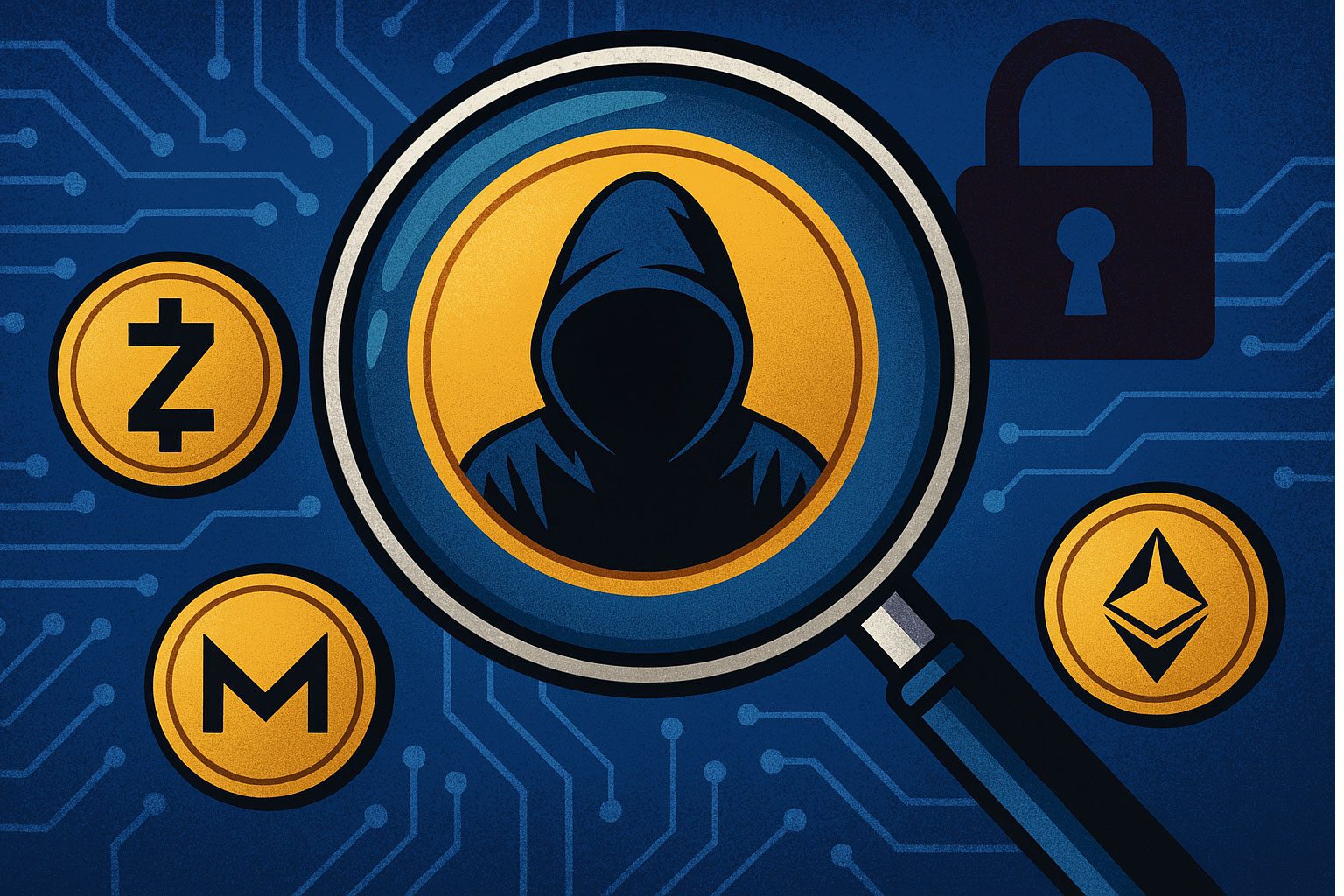

Privacy coins stand out as essential tools that help users boost anonymity and security in cryptocurrency transactions. The digital world faces increasing surveillance, and these specialized cryptocurrencies use advanced cryptographic techniques to hide transaction details. They protect the identity of parties involved and keep transfer amounts private. Standard cryptocurrencies can’t match the complete confidentiality that privacy coins provide.
The crypto privacy coin landscape reveals a rich ecosystem of options built for different purposes. Monero leads the pack as the privacy champion, while other innovative coins enable private smart contracts. These cryptocurrencies have changed our approach to financial privacy. The best privacy coins use sophisticated tools like ring signatures, stealth addresses, and zero-knowledge proofs. These features create a level of anonymity that traditional financial systems just don’t offer. No one can track which coins you own, your total holdings, or the transactions you make.
This piece will uncover the hidden truths about privacy coins in 2025. Let’s take a closer look at how they work, compare top options, tackle regulatory hurdles, and learn ways to buy them while keeping your identity private.
What are Privacy Coins and Why They Matter
The ever-changing world of cryptocurrency has privacy coins as a specialized category. These coins focus on one thing: they make user anonymity and transaction confidentiality better. These digital assets use sophisticated cryptographic techniques to protect transaction details from public view.
Definition and purpose of privacy coins
Privacy-focused coins are cryptocurrencies that hide important transaction details. They keep wallet addresses, user data, and transaction amounts secret for both senders and receivers. These coins use advanced cryptographic methods—zero-knowledge proofs, stealth addresses, ring signatures, and mixing protocols—to aid completely untraceable transactions.
The main goals of privacy coins include:
- You can protect your privacy rights in decentralized transactions
- Digital cash works just like physical money that can’t be traced
- Each coin stays interchangeable whatever its transaction history
Privacy coins meet a basic need in the cryptocurrency ecosystem. They don’t deal very well with the limits of traditional cryptocurrencies. Bitcoin and other non-privacy blockchains let anyone see public addresses and transactions openly. This makes it easy to track deposits and withdrawals. Privacy coins tackle two key aspects: anonymity and untraceability.
Difference between pseudonymity and anonymity
A key difference exists between pseudonymity and anonymity in the cryptocurrency world. Pseudonymous users can be identified, but their identification hides who they really are. Anonymous users can work without being identified at all.
Bitcoin and Ethereum, the major cryptocurrencies, use pseudonymous systems. Your Bitcoin wallet creates an alphanumeric address that everyone can see on the blockchain. All the same, this address gives you pseudonymity rather than anonymity. Financial forensics can trace your transactions back to your ground identity.
Privacy coins want true anonymity. They stop transactions from linking to specific addresses. This makes it very hard to trace funds back to where they started. Anonymity gives you by a lot stronger privacy than pseudonymity.
Why privacy is becoming more important in 2025
Privacy coins matter more in 2025 because several factors come together. Privacy lacks in today’s digital world. Governments and corporations track your online activities, from browsing habits to financial transactions, not just cybercriminals.
On top of that, new cryptocurrency privacy laws in the EU, US, and UK make KYC and coverage rules stricter. These rules affect self-custodied wallets, privacy coins, and DeFi front-ends. The Financial Action Task Force (FATF) pushes Travel Rule compliance into areas that used to have less oversight.
Privacy coins serve good purposes beyond illegal activities. They help reduce government control over finances. This helps people in countries like China, Russia, and North Korea where governments might use blockchain-based applications to watch financial activity and keep people out of the economy.
The privacy coin debate centers on whether anonymity is a criminal risk or a civil right. Platforms like Bitgolder give you the quickest way to buy gold, silver, and crypto anonymously if you want to protect your financial privacy without losing security.
The balance between privacy and transparency grows into one of the biggest blockchain debates in 2025. Legal challenges, public advocacy campaigns, and innovation try to balance these competing interests.
How Privacy Coins Work: The Technology Behind the Shield
Privacy coins use sophisticated cryptographic technologies that work together to protect user identities and transaction details. These technologies create privacy layers that make transactions impossible to trace, yet the network can still verify them.
Zero-knowledge proofs (zk-SNARKs)
Zero-knowledge proofs let one party (the prover) show another (the verifier) that something is true without sharing any extra information. zk-SNARKs (Zero-Knowledge Succinct Non-Interactive Arguments of Knowledge) stand out because they’re efficient and private.
The concept emerged in the late 1980s but really took off when Zcash became the first major cryptocurrency to use it in 2016. This technology lets Zcash create fully encrypted blockchain transactions that the network’s consensus rules can still validate.
The “succinct” part of zk-SNARKs means the system can verify proofs in milliseconds. The proofs need only a few hundred bytes even for complex programs. This makes them perfect for blockchain use. They’re also “non-interactive,” needing just one message from prover to verifier instead of going back and forth.
Zcash rolled out the Halo 2 zero-knowledge proving system in May 2022. This update removed the need for the controversial “trusted setup” that needed public parameters created with a secret (“toxic waste”) that had to be destroyed afterward.
Ring signatures and stealth addresses
Ring signatures are another powerful privacy tool that coins like Monero pioneered. The system lets a group of users sign a transaction together so nobody can tell who actually signed it.
A good example is sending Monero – the protocol takes your real input and adds 10 fake ones (making a ring of 11). These decoys come from actual past transactions, which gives the sender plausible deniability.
Stealth addresses work alongside ring signatures to create new addresses every time someone receives cryptocurrency. Unlike regular wallet addresses you can reuse, stealth addresses are single-use for each transaction.
Monero users get a private view key to see incoming transactions and a private spend key to send funds. This means you can share your public address online without anyone seeing your transaction history.
Mixing and shuffling techniques
Cryptocurrency mixers (or tumblers) boost anonymity by combining source funds from multiple inputs for random periods before sending them to destination addresses. This process of pooling funds and distributing them at random times makes specific coins very hard to track.
The mixing process has three main steps: deposit (sending crypto to unique mixer addresses), mixing (shuffling transactions around), and withdrawal (returning funds from pre-funded wallets, often with delays). This creates what cryptographers call an “anonymity set” – a group of similar-looking transactions.
Bitgolder uses these principles to help privacy-focused investors buy gold, silver, and crypto anonymously.
Trusted Execution Environments (TEEs)
Trusted Execution Environments are a newer privacy tool that creates a secure processor area to protect code and data’s confidentiality and integrity. TEEs create an isolated space with security features that protect assets and applications.
TEEs only let trusted applications access a device’s main processor, peripherals, and memory. Hardware isolation keeps these safe from user-installed apps. This technology helps process private blockchain data without revealing transaction details.
These four technologies – often working together – help privacy coins redefine the limits of financial privacy.
The Best Privacy Coins in 2025: A Comparison

Image Source: Medium
The privacy coin ecosystem has grown into a diverse space with different ways to handle confidentiality in 2025. Let’s get into the most notable privacy-focused cryptocurrencies that rule the market today, beyond their complex cryptographic foundations.
Monero (XMR)
XMR stands without doubt as the champion of privacy coins and keeps its top spot by making privacy mandatory in all transactions. XMR uses ring signatures, stealth addresses, and RingCT to hide the sender, receiver, and transaction amounts. Nobody can link transactions to real identities due to its untraceable design. This makes Monero the gold standard for users who need complete privacy. XMR leads all privacy coins in market value.
Zcash (ZEC)
ZEC breaks new ground with its zk-SNARKs technology that lets users switch between transparent and shielded transactions. This adaptability helps meet regulatory rules while delivering strong privacy when users need it. About 20% of all ZEC coins sit in shielded pools that indicates more users are choosing privacy features. ZEC holds the second spot among privacy coins by market value.
Dash (DASH)
DASH has shifted from being just a privacy coin to become a digital payments solution. The PrivateSend feature mixes coins through CoinJoin to give users optional anonymity. While not as secure as Monero’s privacy tools, DASH processes transactions faster through its masternode network. This makes it perfect for daily purchases that need some privacy.
Oasis Network (ROSE)
In stark comparison to this, ROSE isn’t really a privacy coin but a privacy-first blockchain platform. It stands out by offering confidential smart contracts that protect sensitive data while staying flexible with compliance. Users can customize privacy levels from fully private to completely open. This flexibility makes ROSE attractive to businesses.
Secret Network (SCRT)
SCRT shines with privacy-preserving smart contracts instead of just private transactions. The network uses Trusted Execution Environments (TEEs) to process encrypted data without showing it to node operators. Developers can build decentralized apps with built-in data privacy, taking confidentiality beyond simple payments.
Aleph Zero (AZERO)
AZERO gives users a choice with privacy features while meeting regulatory needs. The platform uses multiple chains with zero-knowledge proofs and secure multi-party computation to store data off-chain. This ensures data stays available only through secure node handshakes.
Beldex (BDX)
BDX creates a detailed privacy ecosystem that covers transactions, communication, and web browsing. The platform hides transaction details using ring signatures and stealth addresses like Monero. Users get BChat for private messaging, BelNet for decentralized VPN service, and Beldex Browser for private web surfing.
MobileCoin (MOB)
MOB focuses on mobile transactions by mixing Monero’s privacy tech with Stellar’s consensus protocol. The coin became popular after Signal messenger added it, letting users send encrypted payments through the chat app. MOB works great for privacy-focused mobile users thanks to its speed and intuitive design.
Bitgolder gives users the fastest way to buy gold, silver, and crypto while keeping their personal information private.
The Dark Side: Risks, Misuse, and Regulation
Privacy coins face mounting pressure as governments worldwide crack down on their potential misuse. These anonymous cryptocurrencies now stand at a crossroads that could alter the map of their existence.
Use in illegal markets and money laundering
Privacy coins serve legitimate purposes, but criminals have turned them into tools for illegal activities. Darknet markets saw privacy coins factor in 19% of total cryptocurrency transactions in 2024, up from 16% in 2023. Monero (XMR) leads the pack with 87% of all privacy coin transactions tied to illegal activities.
Privacy coins worth GBP 2.54 billion were used to launder money in 2024, according to Chainalysis. Europol’s 2025 Internet Organized Crime Threat Assessment shows ransomware payments using privacy coins jumped by 27%.
Regulatory crackdowns and exchange delistings
Cryptocurrency exchanges have responded with widespread delistings. The number of exchanges removing privacy coins climbed to 73 by 2025, up 43% from 51 in 2023. Major players Binance, Kraken, and OKX have dropped popular coins like Monero, Zcash, and Dash.
OKX made its move in December 2023 by announcing the removal of 11 privacy coin trading pairs starting January 2024. Binance’s decision to remove privacy tokens from European and US platforms affected roughly GBP 476.50 million in trading volume.
How governments are responding globally
The European Union leads the charge with plans to outlaw privacy coins and anonymous crypto accounts starting July 1, 2027. This ban stops crypto-asset service providers from any involvement with privacy-enhancing cryptocurrencies.
Japan, South Korea, and Australia already restrict these coins. Platforms like Bitgolder give privacy-focused investors options to buy gold, silver, and crypto anonymously.
Some experts believe these rules might push crypto trading underground. Others promote privacy as a basic right rather than a criminal threat.
How to Buy Privacy Coins Anonymously in 2025

Image Source: WoolyPooly
Privacy coins present unique challenges for buyers who want to stay anonymous in 2025’s regulatory environment. Exchanges now require stricter KYC rules, and privacy-conscious investors need alternative ways to make their purchases.
Why anonymity in purchasing matters
Anonymous buying of privacy coins stands as a vital first step toward financial confidentiality. Your privacy coin’s intended purpose gets negated when you buy through KYC-verified exchanges because your identity stays linked to the original transaction. Personal privacy concerns aside, anonymous purchasing protects you from targeted attacks. Your public crypto holdings make you an easy target for cyberattacks and phishing scams. Anonymous transactions also protect your sensitive financial data from corporations and governments that track online activities more than ever.
Using decentralized exchanges and privacy wallets
Decentralized exchanges (DEXs) give you the best path to anonymous privacy coin purchases. Bisq, TradeOgre, and Haveno let you trade peer-to-peer without identity checks. These non-custodial exchanges create a direct bridge between buyers and sellers without holding your funds.
Privacy-focused wallets paired with DEX purchases boost your anonymity. Wasabi routes all traffic through the Tor network and adds advanced features like silent payments and detailed coin control. DEXs combined with privacy wallets build a strong shield against anyone tracking your transactions.
Bitgolder: The fastest way to buy gold, silver, and crypto anonymously
Bitgolder gives you the quickest way to buy precious metals and cryptocurrency anonymously if you want to vary beyond digital assets. You can exchange Bitcoin and Ethereum for gold and silver while keeping your personal details private. The platform needs minimal customer information and skips ID requirements for transactions up to 20,000 USD. Bitgolder creates a secure path to portfolio variety by mixing precious metals’ timeless value with cryptocurrency breakthroughs, all while keeping your details confidential.
Conclusion
Privacy coins represent a key battleground in the ongoing fight between personal financial sovereignty and governmental oversight. Our exploration shows how technologies like zero-knowledge proofs, ring signatures, and stealth addresses protect users from unwanted surveillance. Monero leads the privacy coin movement, while alternatives like Zcash, Secret Network, and Aleph Zero give compelling options based on specific privacy needs.
The regulatory landscape has become more hostile toward these privacy-enhancing technologies. Exchange delistings and governmental crackdowns might push privacy coins underground. This clash between privacy rights and regulatory compliance will define the next chapter in cryptocurrency’s rise.
True financial confidentiality requires anonymous acquisition methods. Decentralized exchanges combined with privacy wallets create one viable path. Bitgolder emerges as the quickest way to buy gold, silver, and crypto anonymously – particularly valuable if you want to broaden into precious metals while maintaining privacy.
Privacy coins face major hurdles ahead, but their core promise of giving financial sovereignty back to individuals will keep them relevant. A fundamental question remains: should we treat privacy as a civil right or a criminal risk? This answer will shape the future of both privacy coins and the entire cryptocurrency ecosystem. Privacy coins matter deeply whether you support financial privacy, invest with concern, or simply value confidential transactions in this ever-changing digital world.
Key Takeaways
Privacy coins use advanced cryptographic technologies to provide true financial anonymity, going beyond Bitcoin’s pseudonymous nature to offer complete transaction confidentiality in an increasingly surveilled digital world.
• Privacy coins employ zero-knowledge proofs, ring signatures, and stealth addresses to make transactions completely untraceable • Monero leads the market with mandatory privacy, while Zcash offers optional shielded transactions using zk-SNARKs technology • Regulatory crackdowns have led to 73 exchanges delisting privacy coins, with the EU planning a complete ban by 2027 • Anonymous purchasing through decentralized exchanges and privacy wallets is essential to maintain true financial confidentiality • Despite regulatory challenges, privacy coins serve legitimate purposes in protecting financial sovereignty and civil liberties
The fundamental tension between privacy rights and regulatory compliance will continue shaping the cryptocurrency landscape, making privacy coins increasingly important for those seeking true financial autonomy in 2025.
FAQs
Q1. What are the top privacy coins to watch in 2025? The leading privacy coins in 2025 include Monero (XMR), Zcash (ZEC), and Dash (DASH). Newer entrants like Oasis Network (ROSE), Secret Network (SCRT), and Aleph Zero (AZERO) are also gaining traction for their innovative approaches to privacy and smart contract functionality.
Q2. How do privacy coins differ from regular cryptocurrencies? Privacy coins use advanced cryptographic techniques like zero-knowledge proofs, ring signatures, and stealth addresses to conceal transaction details, including sender, receiver, and amount. This provides true anonymity, unlike the pseudonymity offered by regular cryptocurrencies where transactions can potentially be traced.
Q3. Are privacy coins legal to use? The legality of privacy coins varies by jurisdiction. While they’re not universally illegal, many countries are implementing stricter regulations. Some cryptocurrency exchanges have delisted privacy coins due to regulatory pressures. It’s important to check local laws before using privacy coins.
Q4. How can I buy privacy coins anonymously? To purchase privacy coins anonymously, you can use decentralized exchanges (DEXs) that don’t require identity verification. Combining DEX purchases with privacy-focused wallets can enhance anonymity. Some platforms also offer anonymous ways to buy crypto and precious metals without compromising personal information.
Q5. What are the risks associated with using privacy coins? While privacy coins offer enhanced financial confidentiality, they face regulatory challenges and potential misuse for illegal activities. Users should be aware of the evolving legal landscape, potential difficulties in exchanging privacy coins for fiat currency, and the risk of exchange delistings impacting liquidity and value.