
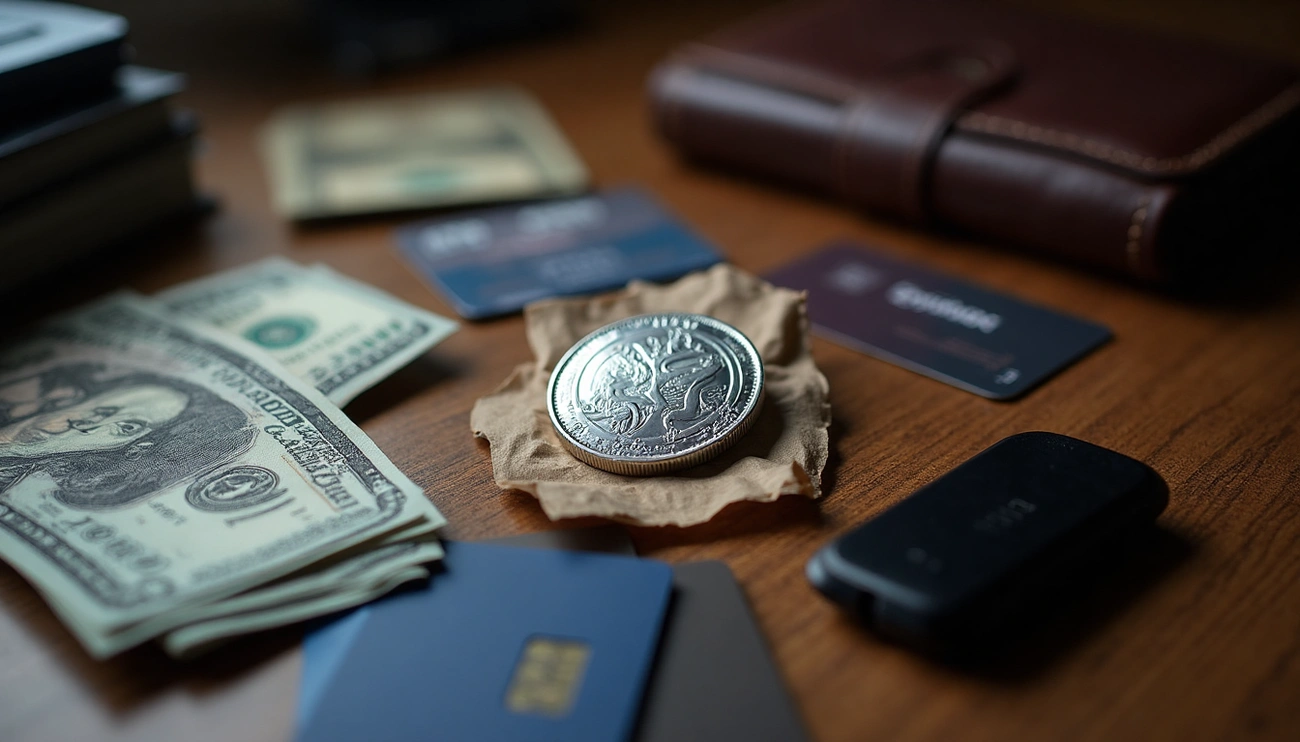

Silver investors need anonymous payment methods more than ever in 2025. Silver prices keep climbing as people worry about tariffs, inflation, and economic slowdown. Silver proves its worth as a reliable store of wealth during uncertain times. This mirrors gold’s performance, where central banks made their biggest purchases since the 1970s back in 2022.
Buying precious metals requires privacy these days. News breaks every month about stolen data showing up on hacker forums and the dark web. Private and anonymous payments give buyers key advantages both online and offline. This piece covers several anonymous online payment options to buy silver in 2025. Buyers can use cryptocurrency platforms like Bitgolder to purchase silver with Bitcoin, pay with traditional cash, or choose other discrete payment methods that work worldwide.
Understanding Anonymous Payments in 2025

Image Source: PlasBit
The digital economy of 2025 has changed how we look at anonymous payments. Let’s learn about privacy in financial transactions before we explore ways to buy silver anonymously.
What does ‘anonymous’ really mean?
Anonymous payment methods let you move money without revealing too much personal information. No system can give you 100% anonymity. Cash leaves traces on security cameras. Digital methods create technical footprints that authorities might use to identify users.
People want anonymous payments to protect their identity. Many value their privacy and don’t want records of their financial choices. Some worry about identity theft, card fraud, or spam marketing if someone steals their details.
Anonymous payments work on a sliding scale rather than being all-or-nothing. Each method gives you different levels of privacy protection. Some hide your identity from stores while others keep transaction details away from banks.
Partial vs full anonymity explained
The difference between partial and full anonymity affects how well your privacy stays protected.
Partial anonymity means stores can’t see your personal details like your name, card number, or address. The payment platform, app, or bank still keeps your information. Digital wallets and virtual cards work this way – they protect your identity from sellers but keep their own transaction records.
Partial anonymity is nowhere near as private as full anonymity, where nobody knows who you are. This level of privacy is tough to get, especially when you buy online. Cash gives you the best privacy for in-person buying, but it doesn’t work well for online shopping.
Cryptocurrency transactions sit somewhere in the middle. Bitcoin and most cryptocurrencies track everything on a public blockchain, making them “pseudonymous” rather than truly anonymous. P2P cryptocurrency markets in 2025 traded at 33% higher than exchange rates. This is a big deal as it means that people value non-KYC bitcoin transactions.
Bitgolder helps people buy silver with cryptocurrency. It bridges the gap between digital currency privacy and owning physical assets.
Why privacy matters when buying silver
Private precious metal investments come with unique benefits.
You don’t need a Social Security number to invest in precious metals, which keeps you anonymous. This privacy protection makes sense historically. President Roosevelt once forced people to sell their gold to the government at unfair prices back in the 1930s. Private silver investments could protect you if something similar happens again.
Physical silver gives you more privacy because nobody can hack or seize it electronically. Your silver stays outside the digital system and safe from modern threats.
Many people misunderstand reporting rules. The IRS only requires reports for cash transactions over $10,000. You don’t need to report purchases made with checks, wire transfers, credit cards, or other non-cash methods, whatever the amount.
Government oversight keeps growing, and investors love the freedom that private precious metal investments offer. Anonymous payments help keep this privacy intact while you build your silver portfolio.
Anonymous Payment Method 1: Prepaid Gift and Debit Cards
Prepaid gift and debit cards are a great first step to protect your privacy when buying silver. These cards create a buffer between you and your purchases, unlike regular payment methods that directly connect to your identity.
How prepaid cards offer partial anonymity
You can load prepaid cards with a set amount of money, and they work independently of your bank account. There’s no need for credit checks, which creates a privacy layer many silver investors find valuable.
You’ll find two main types of these cards: gift cards for specific stores and prepaid debit cards that work anywhere their network is accepted. While gift cards work only with certain merchants, prepaid debit cards give you more flexibility.
The way you buy and activate these cards makes them partially anonymous. Recent market research shows the global prepaid card market will reach USD 2.50 trillion between 2022 and 2027, growing at 10.3% annually. This growth shows how popular these cards are becoming as privacy tools.
These cards don’t make you completely anonymous. Privacy experts call it “pseudonymity” – you’re hidden from the merchant, but your tracks might still be visible elsewhere.
Where to buy prepaid cards with cash
Buying these cards with cash at physical stores gives you the best privacy. You can find them at:
- Grocery stores and supermarkets
- Convenience stores and pharmacies
- Department stores
- Shopping malls
Simon Malls sells gift cards from USD 20.00 to USD 500.00. Most gift cards max out at USD 200.00, though some go up to USD 2000.00. Visa or Mastercard prepaid cards usually top out at USD 1000.00 per card.
Non-reloadable cards are your best bet for privacy. Reloadable cards need you to register with personal details, including Social Security Numbers. You won’t need ID to buy standard gift cards or simple prepaid cards with cash.
Most cards need activation after purchase. To protect your privacy, use made-up personal information during activation – systems only check if the name and address match what you’ll use for online shopping.
Limitations and risks to think about
These cards have some big drawbacks despite their privacy benefits:
Credit cards protect you better against fraud. If someone steals your prepaid card or hacks it, you might lose all your money. Most prepaid cards don’t help you spot unauthorized use or get your stolen money back.
Fees can eat into your balance quickly. You might pay for account maintenance, reloading, ATM use, and even checking your balance. Some cards also charge you for not using them.
Not everyone accepts these cards. Hotels, car rental companies, and subscription services often turn them down. On top of that, you can’t use them for recurring payments or ATM withdrawals.
The regulatory landscape keeps changing. Money laundering concerns are leading to more restrictions on anonymous prepaid cards. The EU’s 5th Anti-Money Laundering Directive has already reduced transaction limits on these cards.
Looking for other options? Platforms like Bitgolder let you buy silver with cryptocurrencies, offering different privacy trade-offs we’ll explore next.
Anonymous Payment Method 2: Cryptocurrency and Bitgolder
Cryptocurrencies have become powerful tools to buy silver privately in 2025. Digital currencies appeal to privacy-conscious investors because they don’t require extensive personal information like traditional banking methods.
Using Bitcoin and Monero for silver purchases
Bitcoin remains popular for silver purchases but provides only pseudonymity instead of complete privacy. The public blockchain ledger records every Bitcoin transaction permanently. Your wallet addresses could link back to your identity if exposed.
Monero (XMR) stands out as a privacy-focused cryptocurrency. It employs advanced technologies like ring signatures, stealth addresses, and RingCT that hide transaction details. These features make Monero transactions nearly impossible to trace, which is why privacy-focused silver investors prefer it.
How Bitgolder helps crypto-to-silver buying
Bitgolder connects cryptocurrency holdings with physical silver assets. The platform lets you pay with Bitcoin (BTC), Ethereum (ETH), Litecoin (LTC), Monero (XMR), and other cryptocurrencies. Buyers can choose their preferred payment method.
The platform’s steadfast dedication to user privacy sets it apart. Customers can buy up to USD 20,000 worth of precious metals without sharing personal details. Bitgolder helps direct exchanges of cryptocurrency for physical silver and keeps transactions confidential.
The buying process is simple. You select silver products, pick your cryptocurrency at checkout, and complete the purchase with compatible wallets like MetaMask or Exodus.
Privacy risks with blockchain transactions
Privacy risks exist even with cryptocurrencies. Public blockchains record all transactions and create permanent audit trails. Advanced blockchain analysis makes completely anonymous transactions harder to achieve.
Most reputable dealers follow Know Your Customer (KYC) and Anti-Money Laundering (AML) rules. These regulations require identity verification whatever payment method you use. Such requirements affect anonymity even with cryptocurrencies.
Tips for using crypto wallets anonymously
Here’s how to boost privacy when buying silver with cryptocurrencies:
- A reliable VPN service hides your IP address on cryptocurrency platforms
- Tor networks add extra anonymity layers for wallet management
- Unique addresses for each transaction prevent linking multiple purchases
- Hardware wallets like Ledger or Trezor provide better security for private keys
- Offline key backups are safer than cloud storage
Cryptocurrencies are a great way to get privacy advantages over traditional payments, and they settle almost instantly when buying silver. Bitgolder and similar platforms help convert digital assets into tangible wealth while maintaining privacy throughout the process.
Anonymous Payment Method 3: Cash and In-Person Deals
Cash remains the best option for complete anonymity in silver transactions. Digital options like Bitgolder now exist for cryptocurrency-based purchases, but physical currency still has unique advantages for buyers who value their privacy.
Why cash is still king for full anonymity
Cash transactions provide privacy benefits that digital alternatives can’t match. The biggest advantage is the absence of a digital footprint—cash doesn’t leave any electronic record that connects you to your purchase. Cash is accessible to more people and completely portable, so you can carry thousands of dollars in a standard wallet.
The anonymity benefit becomes even more valuable because neither party needs to know the other’s identity during a cash transaction. This is a big deal as it means that online methods typically need some form of personal information.
Cash purchases of silver over $10,000 need reporting via IRS Form 8300. The same applies to related transactions within 24 hours that total more than $10,000. Many buyers make smaller, unrelated purchases to keep their privacy intact.
Finding trustworthy local silver sellers
Finding reputable dealers takes some work but is a great way to get privacy benefits. Look for businesses that have stood the test of time—places like Good Ole Tom’s, a 50-year old precious metals dealer.
Pawn shops, jewelry stores, and coin dealers often handle silver and take cash payments. Cities usually have several options available. West Hartford alone has many businesses that handle silver transactions.
Safety tips for in-person transactions
Meeting unknown buyers or sellers just needs extra caution. Never let strangers into your home or share personal details unless necessary. Here are some key safety measures:
- Make your transactions at established retail locations instead of parking lots or public spaces
- Park far away or use public transport to protect your license plate information
- Get security personnel for large transactions with significant amounts of cash or silver
- Keep quiet about your precious metal holdings, even around friends and family
The sort of thing I love about discretion is that it protects both your privacy and physical safety.
Anonymous Payment Method 4: Paysafecard and Similar Vouchers

Image Source: www.paysafecard.com
Silver investors looking for a sweet spot between convenience and privacy will find Paysafecard a great anonymous payment option in 2025. This prepaid voucher system lets you make online purchases without revealing your personal or financial information.
How Paysafecard works for online silver buying
A Paysafecard is a prepaid voucher that comes with a unique 16-digit PIN. Your privacy stays intact since you don’t need to share sensitive data when making purchases, unlike bank transfers or credit cards. Single Paysafecard transactions are capped at USD 300.00. You can combine up to ten PINs for bigger silver purchases, which lets you spend up to USD 1000.00.
Where to buy and how to use it
Getting a Paysafecard is easy – just buy vouchers with cash at any of the 400,000+ retail locations worldwide. You’ll find them at convenience stores, supermarkets, and gas stations. The company’s website lists silver dealers that take Paysafecard payments. Bitgolder provides another option if you prefer using cryptocurrency.
Limitations in merchant acceptance
Paysafecard does come with some drawbacks. Not all silver dealers accept this payment method, which limits your buying options. The fees change based on the amount – USD 10.00 cards cost an extra USD 1.49, while USD 100.00 cards add USD 3.49. Your card will face a monthly USD 2.00 fee after sitting unused for 24 months. Remember that chargebacks aren’t possible, so you can’t recover funds if something goes wrong with the transaction.
Conclusion
Privacy is a crucial concern for silver investors as we direct our way through 2025. This piece explores several proven methods to buy silver while you retain control over different levels of anonymity. Each method has its own benefits that align with specific privacy requirements.
Prepaid cards are a great first step toward anonymous silver purchases, though they come with some limitations and fees. Privacy-focused cryptocurrencies like Monero provide better protection when you use proper wallet management techniques. Bitgolder is a valuable platform for investors who want to convert their Bitcoin and other cryptocurrencies into physical silver without sharing personal information.
Cash transactions remain the best choice to stay completely anonymous. You’ll need to find reliable local dealers and take safety measures. Paysafecard gives you another option for online purchases, but fewer merchants accept it.
The method you pick should strike a balance between ease of use and privacy needs. Most silver investors use multiple approaches. They might use Bitgolder to convert cryptocurrency to silver and make cash purchases to stay anonymous. The ever-changing world of economics continues to highlight silver’s importance as a physical asset outside digital finance.
Note that discretion goes beyond just how you pay. You should protect details about your silver holdings as carefully as your purchase privacy. These steps will help you grow your silver portfolio while staying as anonymous as you need in today’s closely watched financial world.
Key Takeaways
Privacy-conscious silver investors in 2025 have multiple anonymous payment options, each offering different levels of protection and convenience for building precious metal portfolios discreetly.
• Cash remains the gold standard for complete anonymity in silver purchases, requiring no digital footprint or personal information disclosure
• Cryptocurrency platforms like Bitgolder enable anonymous silver purchases up to $20,000 without identity verification using Bitcoin, Monero, and other digital currencies
• Prepaid cards offer partial anonymity by separating your identity from merchants, though they come with fees and limited fraud protection
• No payment method achieves 100% anonymity – understand the privacy spectrum from partial (hiding from merchants) to full anonymity (no identity traces)
• Combine multiple methods strategically to maximize privacy while balancing convenience, safety, and your specific investment goals
The key to successful anonymous silver investing lies in understanding each method’s trade-offs and implementing proper security practices, whether using traditional cash transactions or emerging cryptocurrency solutions.
FAQs
Q1. What are the most anonymous payment methods for buying silver in 2025? Cash remains the most anonymous option for in-person transactions. For online purchases, cryptocurrencies like Bitcoin and Monero offer high levels of privacy when used correctly. Prepaid cards and vouchers like Paysafecard can also provide partial anonymity for smaller purchases.
Q2. How can I buy silver with cryptocurrency anonymously? Platforms like Bitgolder allow you to purchase silver using various cryptocurrencies without revealing personal information. You can buy up to $20,000 worth of precious metals anonymously. Use privacy-focused cryptocurrencies and follow best practices like using unique wallet addresses for each transaction to maximize anonymity.
Q3. Are there any risks associated with anonymous silver purchases? Yes, there are some risks to consider. Cash transactions carry physical safety concerns. Cryptocurrency transactions may leave traces on public blockchains. Prepaid cards offer limited fraud protection. Always research thoroughly, use reputable dealers, and take necessary precautions to protect your privacy and security.
Q4. Do I need to report anonymous silver purchases to the IRS? Cash purchases of silver exceeding $10,000 must be reported via IRS Form 8300. However, purchases made with other methods like cryptocurrencies, wire transfers, or credit cards don’t trigger reporting requirements regardless of the amount. Always consult with a tax professional for the most up-to-date advice on your specific situation.
Q5. How can I ensure maximum privacy when buying silver online? To maximize privacy for online silver purchases, use a combination of methods. Utilize a VPN to mask your IP address, use privacy-focused cryptocurrencies, generate unique wallet addresses for each transaction, and consider platforms like Bitgolder that prioritize user anonymity. Avoid providing unnecessary personal information and be cautious about leaving digital footprints.